

- About Us
- Business Law
- Civil & Commercial
- Antitrust Litigation
- Appellate Litigation
- Banking Litigation
- Breach of Contract
- Breach of Fiduciary Duty
- Business Partnership and Shareholder Disputes
- Commercial Arbitration
- Commercial Fraud
- Construction Litigation
- Employment Litigation
- Insurance Coverage Dispute
- Oil & Gas Litigation
- Pre-Litigation & Dispute Resolution
- Real Estate/Property Dispute
- Trade Secrets & Unfair Competition Litigation
- Family Law
- Resources
- Contact
Our Blog Post
Moving Your Business to Texas: How to Relocate Without Starting Over

Short answer: Yes, in most cases you can move your company to Texas without dissolving it and forming a brand-new entity. The cleanest path is usually a statutory conversion (sometimes called domestication), which lets the same business continue as a Texas entity while keeping its EIN, its contracts, its licenses, and its operating history intact. The harder questions are rarely the state filings; they are the downstream items like federal contracts, tax elections, and franchise tax that companies tend to overlook until after they have moved.
The migration to Texas is not slowing down
If it feels like every other company is relocating to Texas, the numbers back it up. According to CBRE’s 2026 report on headquarters relocations, the number of headquarters relocation announcements jumped to 164 in 2025, up from 96 the year before, and Dallas-Fort Worth led the entire country in net new headquarters gained. Since 2018, DFW has captured more headquarters relocations than any other metropolitan area in the United States. The drivers are familiar: no state income tax, lower operating costs, a deep talent pool, and a regulatory climate that companies describe as predictable and pro-business.
We see this trend up close. A growing share of our intake comes from out-of-state companies, from one-owner LLCs to established operating businesses, that have already signed a Texas lease or hired their first Texas employees and now want their legal home to match where they actually do business. The question they almost always lead with is some version of: can we move the company here without blowing up everything we have built?
The three ways to “move” a business to Texas
There is no single button for relocating an entity, and the method you choose has real consequences. There are three common approaches.
1. Statutory conversion (domestication).
This is usually the best option for a company that wants to fully relocate. The business converts from, say, a Maryland LLC into a Texas LLC. Critically, it remains the same legal entity the entire time. It keeps its formation date, its EIN, its bank accounts, its contracts, and its track record. Nothing is transferred to a new company because there is no new company; the existing one simply continues under Texas law. For most relocating businesses, this is the answer.
2. Foreign qualification.
Here the company keeps its home-state entity and simply registers to do business in Texas as a foreign entity. This is the right move if you are expanding into Texas but intend to remain, legally, a Delaware or California or New York company. It is fast, but it leaves you tethered to your old state’s annual filings, fees, and franchise or income taxes. If your goal is to actually leave the old state behind, foreign qualification alone does not get you there.
3. Dissolve and re-form.
Some owners assume the only way to become a Texas company is to shut down the old entity and start a fresh one here. For most established businesses, this is the worst option. It can break contracts that do not assign cleanly, force a new EIN, interrupt licenses and registrations, and create a gap in the company’s history that lenders, customers, and government agencies notice. Occasionally it is the right call, but only after weighing what you would lose.
How a Texas conversion actually works
A conversion is a cross-border transaction, which means the laws of both states have to permit it and both have to be followed. The good news is that Texas and most other states allow it.
On the Texas side, the company adopts a plan of conversion and files a certificate of conversion with the Texas Secretary of State, with the new Texas certificate of formation attached. On the home-state side, the company files the equivalent articles of conversion to complete the move out of that jurisdiction. The entity then operates under a fresh set of Texas governance documents, a company agreement for an LLC or bylaws for a corporation, conformed to Texas law and to how the owners actually run the business.
A practical efficiency worth knowing: if the company is already registered in Texas as a foreign entity (many are, because they qualified here before deciding to fully relocate), that foreign registration is withdrawn automatically when the conversion is filed. There is no separate withdrawal step to remember.
The issues companies actually trip over
In our experience, the state filings are the easy part. The items below are where relocations get complicated, and where getting it right early saves real money and aggravation later.
Keeping your EIN and your tax election.
One of the main reasons companies choose conversion over a fresh start is to keep the same EIN. A state-law conversion in which the same entity continues generally preserves the EIN, and an existing tax election (such as an S-corporation election for an LLC) generally carries through as well. This is exactly the result most owners want, but it depends on structuring the move as a true continuation rather than a transfer to a new entity.
Federal contracts.
This is the one we flag hardest for government contractors. A conversion that preserves the same legal entity and EIN is generally not a transfer that requires a formal novation, because no assets are moving to a separate successor company. That said, the federal rules do not address conversions cleanly, and contracting officers vary in how they treat them. At a minimum, a contractor will need to notify the responsible contracting officers and update its SAM.gov registration to reflect the new state of organization and address. Plan for this to run on the agencies’ timeline, not yours, and start it early.
Texas franchise tax.
Texas has no personal income tax, but it does impose a franchise tax (often called the margin tax) on most entities. Becoming a Texas entity does not exempt you from it, and a conversion filing has to address franchise tax status as part of the paperwork. Factor it into your tax planning rather than treating Texas as a tax-free zone.
Contracts, licenses, and lender consents.
Loan agreements, leases, major customer contracts, and industry licenses often contain notice provisions, change-of-organization clauses, or consent requirements that get triggered by a move. A conversion keeps the same entity, which helps, but it does not automatically satisfy a notice obligation buried in a credit agreement. Inventory these before you file.
Timing around your lease and operations.
Companies frequently sign the Texas lease first and address the entity later. That order is fine, but the conversion, the SAM.gov updates, banking changes, and payroll registration all take time. Sequencing them deliberately avoids the scramble of having Texas operations running under an entity that still says it lives somewhere else.
The takeaway
Relocating to Texas does not have to mean starting your company over. For most established businesses, a statutory conversion lets you become a Texas entity while keeping the EIN, contracts, and history that make the business worth relocating in the first place. The filings themselves are straightforward and inexpensive. The value is in spotting the federal contract, tax, and contractual issues before they become problems, and in choosing the relocation method that fits your specific situation rather than the one that sounds simplest.
Murrah & Killough, PLLC is a Houston transactional firm that serves closely held businesses across Texas through an outside general counsel model, Collaborative Business Counsel®. Our practice includes entity formation and conversions, mergers and acquisitions, commercial real estate, and regulatory matters. If your company is planning a move to Texas, contact our transactional team and we will map out the right path for your business.
This article is general information, not legal advice, and does not create an attorney-client relationship.
Contact Our Team Today!
Fields Marked With An “*” Are Required
"*" indicates required fields

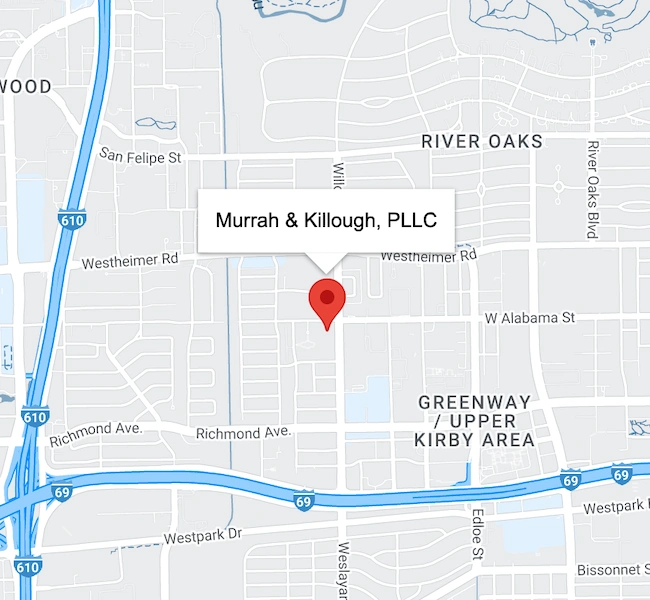
Houston Office
3000 Weslayan St.
Suite 305
Houston, Texas 77027
Phone
281-501-1601
Copyright © 2026 Murrah & Killough, PLLC. All rights reserved.
