

- About Us
- Business Law
- Civil & Commercial
- Antitrust Litigation
- Appellate Litigation
- Banking Litigation
- Breach of Contract
- Breach of Fiduciary Duty
- Business Partnership and Shareholder Disputes
- Commercial Arbitration
- Commercial Fraud
- Construction Litigation
- Employment Litigation
- Insurance Coverage Dispute
- Oil & Gas Litigation
- Pre-Litigation & Dispute Resolution
- Real Estate/Property Dispute
- Trade Secrets & Unfair Competition Litigation
- Family Law
- Resources
- Contact
Our Blog Post
What Happens to Employees During a Merger? A Legal Breakdown

How a Deal Structure Determines What Happens to Your Job
What happens to employees during a merger depends heavily on how the deal is structured. In a stock purchase or statutory merger, employees are more likely to keep their jobs, since the company that employs them continues to exist as a legal entity. In an asset sale, employees are technically terminated by the seller, and the buyer independently decides whether to offer them new positions, making job cuts more likely. The distinction matters just as much for companies planning how to structure a deal as it does for managing the workforce consequences that follow.
Stock Purchases and Mergers: Employment Usually Continues
When a deal is structured as a stock purchase or a statutory merger, the legal employer does not change, even though ownership does. Employees generally remain employed under the same terms, and several key obligations typically carry over to the surviving company without interruption:
- Union contracts
- Employee benefit plans
- Outstanding wage claims
This continuity is one of the main practical differences between a stock deal and an asset deal, and it often influences how a transaction gets structured in the first place.
Asset Sales: A Different Legal Picture
An asset sale works differently. The seller’s employees are considered terminated as of the closing, and the buyer is not automatically obligated to hire any of them. Many buyers do extend job offers to some or all of the seller’s workforce, but they are generally free to set new terms, including pay, benefits, and job titles, for anyone they choose to bring on. Employees who are not offered a position with the buyer are, in effect, laid off by the seller, even if the business itself continues operating under new ownership.
The WARN Act and Employee Notice Requirements
Larger transactions can trigger notice obligations under the federal Worker Adjustment and Retraining Notification Act, generally known as the WARN Act. This law requires covered employers to give affected employees advance written notice before certain layoffs or closures, with the specific requirement generally scaling to the size of the employer and the layoff.
Responsibility for WARN notice often depends on timing. If a layoff happens before or on the closing date, the seller is typically responsible for notice, while the buyer generally becomes responsible for anything that happens afterward. Texas does not have its own state-level WARN law, so employers here rely solely on the federal WARN Act’s notice requirements.
That said, a transaction involving employees outside of Texas may still need to satisfy other states’ notice laws, some of which carry lower thresholds than the federal standard.
What Happens to Benefits and Non-Compete Agreements
Employee benefits and restrictive covenants raise their own questions in a merger or acquisition. Depending on the deal structure, the following issues commonly come up:
- Whether the buyer will assume the seller’s existing 401(k), health plan, or other benefit programs
- Whether terminated employees in an asset sale are owed COBRA continuation coverage from the seller
- Whether an employee’s existing non-compete or non-solicitation agreement transfers to the buyer, and how Texas’s non-compete enforceability standards apply
- Whether new employment agreements need to be signed as a condition of continued employment with the buyer
These questions are usually addressed directly in the transaction documents, but employees are not always given a clear explanation of how the fine print actually affects them personally.
Why the Structure of the Deal Matters So Much
Because a stock deal and an asset deal produce such different outcomes for employees, understanding which structure applies to a specific transaction is often the first question worth answering, well before getting into the finer details of any individual employee’s situation. A mergers and acquisitions lawyer helps both buyers and sellers think through employment consequences early in the deal process, rather than leaving them as an afterthought once the transaction documents are already drafted.
Talk to Murrah & Killough, PLLC About Your Merger or Acquisition
Whether you are structuring a deal or trying to understand what a pending merger means for your own job, having a clear picture of the legal framework matters. Our team at Murrah & Killough, PLLC can help you understand how a specific transaction affects employment, benefits, and existing agreements.
Call 281-501-1601 or fill out an online contact form to discuss your specific circumstances with a mergers and acquisitions lawyer.
Contact Murrah & Killough, PLLC for skilled business law litigation.
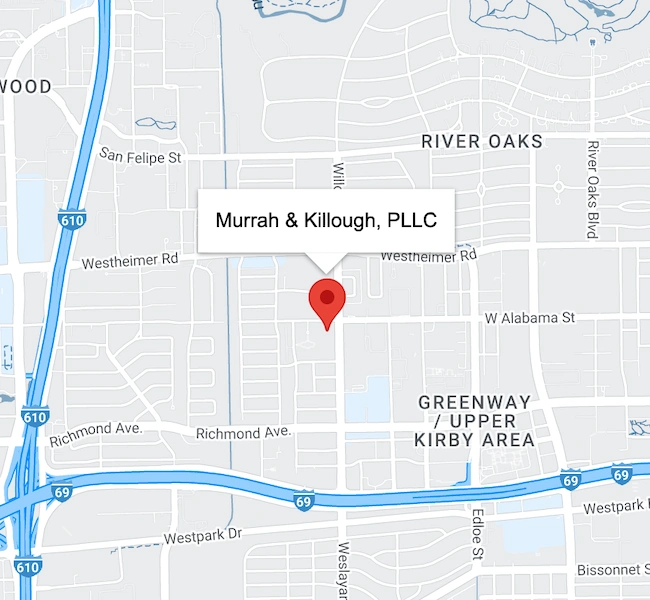
Contact the experienced lawyers at Murrah & Killough, PLLC today & schedule your free consultation. We proudly serve Houston, & all throughout Texas. Visit our law offices at:
Our Houston Office
3000 Weslayan St. Suite 305
Houston, Texas 77027
Phone: (281) 501-1601
Contact Our Team Today!
Fields Marked With An “*” Are Required
"*" indicates required fields

Houston Office
3000 Weslayan St.
Suite 305
Houston, Texas 77027
Phone
281-501-1601
Copyright © 2026 Murrah & Killough, PLLC. All rights reserved.
