

- About Us
- Business Law
- Civil & Commercial
- Antitrust Litigation
- Appellate Litigation
- Banking Litigation
- Breach of Contract
- Breach of Fiduciary Duty
- Business Partnership and Shareholder Disputes
- Commercial Arbitration
- Commercial Fraud
- Construction Litigation
- Employment Litigation
- Insurance Coverage Dispute
- Oil & Gas Litigation
- Pre-Litigation & Dispute Resolution
- Real Estate/Property Dispute
- Trade Secrets & Unfair Competition Litigation
- Family Law
- Resources
- Contact
Our Blog Post
Commercial Lease Considerations for Companies Moving to Houston

What to Review Before Signing a Houston Commercial Lease
Companies moving to Houston should review the lease type, permitted use, build-out responsibilities, and exit terms of any commercial space before signing, since these details determine both your monthly costs and your flexibility down the road. A commercial lease is a long-term financial commitment, and small differences in the language can substantially affect your bottom line.
Understand the Type of Lease You Are Signing
Commercial leases generally fall into a few structures, and the type you sign changes what you are responsible for paying each month. Common lease types include:
- Gross leases, where the landlord covers most operating expenses
- Net leases, where the tenant pays a share of property taxes, insurance, or maintenance
- Modified gross leases, which split responsibilities between landlord and tenant
- Triple net leases, where the tenant covers taxes, insurance, and maintenance in addition to rent
The lease type affects your predictability of costs from month to month, so it is worth confirming exactly which expenses fall on you before comparing rent prices between properties.
Confirm the Space Is Zoned for Your Use
Not every commercial space is zoned or permitted for every type of business. Before signing, confirm that the property zoning allows your intended use, whether that is office space, retail, warehousing, or a specialty use like food service. It also helps to check whether the property has enough parking to meet Houston’s requirements for your type of business, since parking shortfalls can delay occupancy permits even after the lease is signed. If your business changes or expands its operations later, it is worth confirming whether the lease and the zoning would still support that shift.
Clarify Build-Out and Tenant Improvement Responsibilities
Many spaces require some level of build-out before they are ready for your business, whether that is new flooring, updated electrical work, or a full interior renovation. Before signing, clarify who pays for these improvements and who owns them once installed.
Key questions to work through with the landlord include:
- Who pays for the initial build-out and any future modifications
- Whether a tenant improvement allowance is offered
- What happens to fixtures and improvements at the end of the lease
- How long is the build-out expected to take before you can occupy the space
Unclear build-out terms are one of the most common sources of disputes between landlords and tenants once a lease is signed.
Review Term Length and Renewal Options
Lease terms can range from a few years to a decade or more, and the right length depends on how confident you are in your growth plans. A shorter term offers flexibility but less rate certainty, while a longer term can lock in favorable rent but limits your ability to relocate.
Renewal options matter just as much as the initial term. Look closely at whether the lease includes an option to renew, what the rent adjustment would look like at renewal, and how much notice you are required to give before exercising that option.
Understand Personal Guarantees and Exit Terms
Many commercial landlords require a personal guarantee, particularly for newer businesses without an established credit history. This means an individual, rather than only the business entity, becomes personally responsible for the lease obligations if the company defaults. Some guarantees apply for the full lease term, while others burn off after a set period of on-time payments, so it is worth negotiating those terms rather than accepting the landlord’s first draft. Understanding the scope of that guarantee, including any caps or time limits, is an important part of evaluating the overall risk of the lease.
It is also worth reviewing what happens if you need to exit the lease early, whether through a subletting clause, an assignment provision, or an early termination option, since business needs can shift faster than a lease term allows.
Have the Lease Reviewed Before You Sign
A commercial lease is a binding contract, and the language used throughout can have serious financial consequences. Before you make a binding commitment, you should have an attorney with strong familiarity with Harris County commercial real estate practices review the document thoroughly. In many cases, lease terms are negotiable, so do not assume the first draft is final.
Sign Your Houston Lease With Confidence
Our attorneys at Murrah & Killough, PLLC work on commercial real estate matters with businesses across a spectrum of industries, service industries, healthcare practices, and manufacturing, including lease review and negotiation for companies relocating to or expanding within the Houston area. If you are evaluating a commercial lease, contact our office or call us today at 281-501-1601 to talk with our attorneys before you sign.
Contact Murrah & Killough, PLLC for skilled business law litigation.
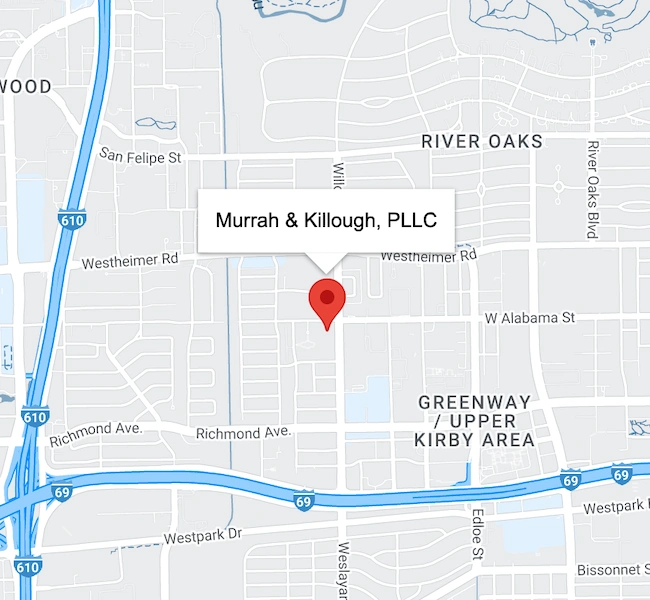
Contact the experienced lawyers at Murrah & Killough, PLLC today & schedule your free consultation. We proudly serve Houston, & all throughout Texas. Visit our law offices at:
Our Houston Office
3000 Weslayan St. Suite 305
Houston, Texas 77027
Phone: (281) 501-1601
Contact Our Team Today!
Fields Marked With An “*” Are Required
"*" indicates required fields

Houston Office
3000 Weslayan St.
Suite 305
Houston, Texas 77027
Phone
281-501-1601
Copyright © 2026 Murrah & Killough, PLLC. All rights reserved.
