

- About Us
- Business Law
- Civil & Commercial
- Antitrust Litigation
- Appellate Litigation
- Banking Litigation
- Breach of Contract
- Breach of Fiduciary Duty
- Business Partnership and Shareholder Disputes
- Commercial Arbitration
- Commercial Fraud
- Construction Litigation
- Employment Litigation
- Insurance Coverage Dispute
- Oil & Gas Litigation
- Pre-Litigation & Dispute Resolution
- Real Estate/Property Dispute
- Trade Secrets & Unfair Competition Litigation
- Family Law
- Resources
- Contact
Our Blog Post
How to Prove Fraud in a Business Transaction

What Texas Law Requires You to Show
Finding out that a deal you signed was built on a lie is a different problem from a deal that simply fell through. To prove fraud in a business transaction in Texas, you generally have to show that the other side made a material false statement, or a promise it never intended to keep, to get you into the deal, and that you relied on it and were harmed.
A statement is material when it is the kind of fact that would affect a reasonable person’s decision to sign, such as a company’s revenue or a known problem with a property.
An honest projection that turns out wrong, such as a sales forecast that falls short, is not fraud. A broken promise is not fraud either, unless the other side never intended to keep it when they made it. That difference is what separates fraud from breach of contract claims.
Which Fraud Claim Fits Your Deal?
You may have more than one way to bring a fraud claim. Texas offers a statutory claim under Section 27.01 of the Texas Business and Commerce Code and a common-law fraud claim that courts apply to any transaction. Which one fits your deal depends on what changed hands and what you can show about the other side’s knowledge:
| Statutory Fraud | Common-Law Fraud | |
|---|---|---|
| Deals covered | Transactions involving real estate or stock in a corporation or joint stock company | Any business transaction |
| What you prove | A false statement of a past or existing material fact, or a false promise, made to induce you into the contract and relied on | A material false statement, made to be relied on, actually relied on, and causing injury |
| Knowledge needed for actual damages | No separate proof that the other side knew the statement was false | Proof the statement was made knowing it was false, or recklessly without knowing whether it was true |
If someone else on the other side knew the statement was false, stayed silent, and benefited from it, the statute can reach that person too.
What Evidence Actually Proves Business Fraud?
Fraud is proved with the paper trail a deal already creates. These records show what the other side said, when they said it, and what they knew at the time:
- The statement: Emails, term sheets, marketing packages, due diligence answers, and drafts showing how the language changed.
- Timing: Records dated when the statement was made, since the question is whether it was false then, not whether it became false later.
- Intent behind a promise: Budgets, management notes, and third-party messages from the same period as the promise.
- Awareness: Internal reports, warnings, or messages showing what the other side knew and when they knew it.
- Reliance: The record behind your decision, such as the approval, the wire transfer, the signature, and any memo explaining why you went forward.
Those records are easiest to gather early, while the people who hold them are still reachable and message histories are intact, and they become the core of any business fraud and misrepresentation dispute.
How Long Do You Have to File a Fraud Claim in Texas?
If you only recently learned the truth about the deal, the filing deadline may not have started running when you signed. Under Section 16.004 of the Texas Civil Practice and Remedies Code, a fraud claim generally must be filed within four years after the claim accrues, and Texas courts have held that fraud can delay that starting point until the fraud was discovered, or could have been discovered with reasonable diligence.
Writing down when you first learned a statement was false, and how you learned it, gives an attorney what is needed to pin down that date.
What Can You Recover if You Prove Fraud?
The recovery available depends on which claim you bring and what you can prove about the other side’s knowledge:
- Actual damages: The financial loss the fraud caused, available under both the statute and the common-law claim.
- Exemplary damages: An additional award meant to punish serious misconduct. Under the statute, this depends on actual awareness that the statement was false, and Texas law generally requires proof by clear and convincing evidence, a standard that calls for a firm belief in the facts.
- Fees and costs: Under the statute, you can recover reasonable and necessary attorney’s fees, expert witness fees, deposition copy costs, and court costs from anyone who violates it.
Talk With Our Team About How to Prove Fraud in a Business Transaction
Learning that a business partner or counterparty misled you can feel like a personal betrayal as much as a financial loss. Knowing where to start can feel overwhelming.
At Murrah & Killough, PLLC, we handle contract and business disputes for individuals and businesses from our Houston office. If you want help understanding how to prove fraud in a business transaction, call 281-501-1601 or contact us to have an attorney review what you have.
Contact Murrah & Killough, PLLC for skilled business law litigation.
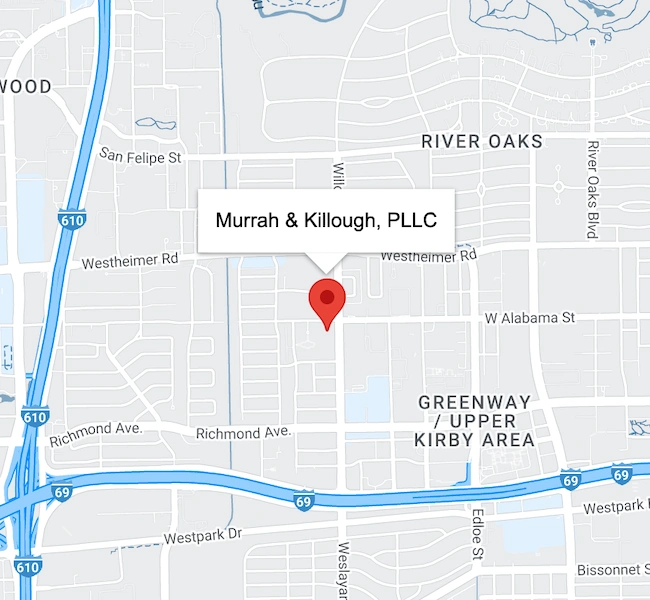
Contact the experienced lawyers at Murrah & Killough, PLLC today & schedule your free consultation. We proudly serve Houston, & all throughout Texas. Visit our law offices at:
Our Houston Office
3000 Weslayan St. Suite 305
Houston, Texas 77027
Phone: (281) 501-1601
Contact Our Team Today!
Fields Marked With An “*” Are Required
"*" indicates required fields

Houston Office
3000 Weslayan St.
Suite 305
Houston, Texas 77027
Phone
281-501-1601
Copyright © 2026 Murrah & Killough, PLLC. All rights reserved.
