

- About Us
- Business Law
- Civil & Commercial
- Antitrust Litigation
- Appellate Litigation
- Banking Litigation
- Breach of Contract
- Breach of Fiduciary Duty
- Business Partnership and Shareholder Disputes
- Commercial Arbitration
- Commercial Fraud
- Construction Litigation
- Employment Litigation
- Oil & Gas Litigation
- Pre-Litigation & Dispute Resolution
- Real Estate/Property Dispute
- Trade Secrets & Unfair Competition Litigation
- Family Law
- Resources
- Contact
Houston Banking Litigation Attorney
Representing Houston Businesses in Disputes With Banks and Lenders
 When a bank calls a loan, freezes an operating account, or sues on a note, a business can lose access to money it counted on for payroll and vendors. A Houston banking litigation attorney can review the loan documents and account records to sort out what the bank has the right to do and what it may owe your business in return.
Murrah & Killough, PLLC represents Houston companies in disputes with their banks and lenders as part of our commercial litigation practice. Call 281-501-1601 or contact us to talk through what is happening with your account.
Why Houston Businesses Choose Murrah & Killough, PLLC for Bank Disputes
A lender comes to a dispute with its own documents, account history, and attorneys. Your business deserves counsel who reads those same documents from your side of the table and explains which provisions actually control.
Our attorneys bring more than 80 combined years of legal experience and represent clients as both plaintiffs and defendants in commercial disputes. We represent all forms of entities across a spectrum of industries, service industries, healthcare practices, and manufacturing. For businesses that want steady guidance after a bank dispute is resolved, we can also serve as your outside general counsel.
Timing matters in these cases. A notice of default or acceleration, meaning the lender is calling the full balance due at once, can start deadlines that shape every option that follows.
Bank Disputes We Help Houston Businesses Work Through
Most bank disputes start with something a business owner cannot ignore: a letter demanding payment, an account that suddenly will not clear, or a lender pointing to a clause nobody remembers agreeing to. These are some of the situations we can help your business handle:
- Your lender calls the loan or sues on a note: We can review the balance the bank claims, how it was calculated, and whether the loan documents allowed the lender to accelerate the debt.
- Your account is locked or payments go wrong: We address frozen or debited accounts, checks the bank refused to pay, and payments made without your business’s authorization.
- An owner signed a personal guaranty: A guaranty is a promise to pay the company’s debt if the company does not, and we help owners and affiliated companies respond when a lender comes to collect on one.
- The bank did not hold up its end: When a lender breaks its own loan agreement or mishandles an account, we can bring the claim with your business as the plaintiff.
Loan, note, and guaranty disputes are contract cases at their core, which is why they overlap with the breach of contract disputes we handle. Because these cases turn largely on the signed documents rather than anyone’s memory of the conversation, your loan agreement, any guaranty, and your account statements give us the clearest starting picture.
Which Court Will Hear Your Bank Dispute?
If you have heard about the Texas Business Court, you may wonder whether a large loan dispute would end up there. Disputes over loans from a bank, credit union, or savings and loan institution generally fall outside one of that court’s main routes for commercial cases, so even a high-dollar case is usually heard in a state district court, such as a Harris County district court, rather than the Business Court.
Where a case is heard affects how it moves, so it is one of the first questions we can answer once we review your loan documents.
What Can a Business Recover in a Banking Dispute?
What a business can recover depends on the type of claim, but the starting point is the money it actually lost.
Take a bank that refuses to pay a check that was properly payable from the account. Texas’s wrongful dishonor statute makes the bank liable for the actual damages that refusal proximately caused, meaning the losses it directly led to, and those damages can include consequential losses that followed from the unpaid item.
On the loan and note side, the remedies are those of an ordinary contract case: money damages, and sometimes a court ruling on what each side owes under the documents. Courts award those through judgments once the documents and the numbers are proved.
What Deadlines Apply to a Dispute With a Bank in Texas?
Waiting to see whether the bank backs down can quietly use up time your business needs. The deadline that applies depends on the type of claim, and more than one can run at once. These Texas time limits can come into play with a bank:
- Six years: Under Section 3.118 of the Texas Business and Commerce Code, a suit to enforce a note payable at a definite time generally must be filed within six years after the due date stated in the note, or the accelerated due date if the lender accelerated the debt.
- Four years: Texas allows four years to sue for a debt, fraud, or breach of fiduciary duty, counted from when the claim accrues, which is generally when the legal injury occurs.
- One year: Under Texas’s rule on reporting forged or altered items, a customer who does not discover and report an unauthorized signature or alteration within one year after the bank statement is made available loses the right to raise it against the bank, regardless of how careful either side was.
Why the Records You Already Have Matter
Once a lawsuit starts, the bank’s records about your account are not simply handed over on request. Section 59.006 of the Texas Finance Code sets one exclusive process for getting a financial institution to produce customer records, including a requirement that the party asking for them cover the bank’s reasonable costs of producing them.
The statements, loan correspondence, and account notices your business already keeps are not subject to that process. Keeping them organized from the first sign of trouble gives us something to work with right away and can move a case forward.
Talk With a Houston Banking Litigation Attorney About Your Bank Dispute
A dispute with your own bank can put cash flow and growth plans on hold at once. Knowing where your business stands under the loan documents is the first step toward getting those plans moving again.
Murrah & Killough, PLLC works with Houston businesses on disputes with their lenders, from the first default notice and pre-litigation dispute resolution through litigation. To speak with a Houston banking litigation attorney about your loan or account, call 281-501-1601 or reach out to our team.




Contact Our Team Today!
Fields Marked With An “*” Are Required
"*" indicates required fields

Houston Office
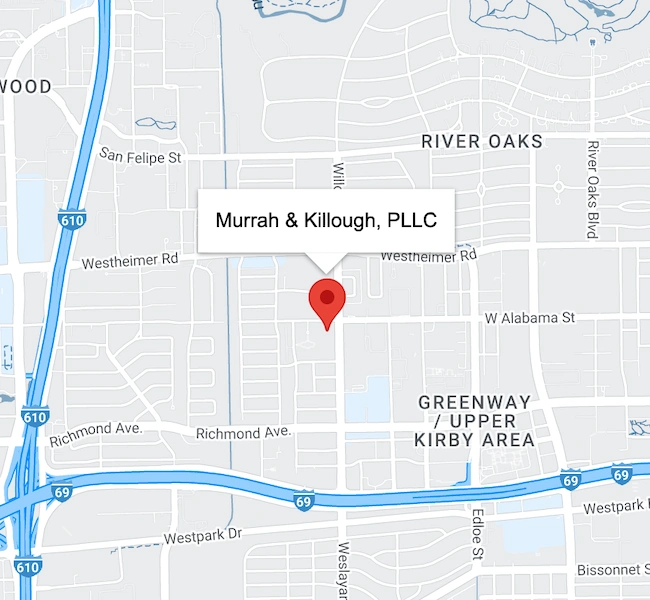
3000 Weslayan St.
Suite 305
Houston, Texas 77027
Phone
281-501-1601
Copyright © 2026 Murrah & Killough, PLLC. All rights reserved.
