

- About Us
- Business Law
- Civil & Commercial
- Antitrust Litigation
- Appellate Litigation
- Banking Litigation
- Breach of Contract
- Breach of Fiduciary Duty
- Business Partnership and Shareholder Disputes
- Commercial Arbitration
- Commercial Fraud
- Construction Litigation
- Employment Litigation
- Insurance Coverage Dispute
- Oil & Gas Litigation
- Pre-Litigation & Dispute Resolution
- Real Estate/Property Dispute
- Trade Secrets & Unfair Competition Litigation
- Family Law
- Resources
- Contact
Houston Insurance Coverage Dispute Lawyer
Help When Your Insurance Company Denies, Delays, or Underpays a Claim
 When an insurance company denies a claim, drags out its decision, or offers far less than the loss, it can leave a family or a business paying for damage it believed was covered. An insurer’s first answer is not always the final word. Texas law sets rules for how insurers must handle claims and gives policyholders ways to recover what is owed when those rules are broken. A Houston insurance coverage dispute lawyer can measure what your insurer did against those rules and explain your options.
Murrah & Killough, PLLC represents individuals and businesses in insurance disputes through our civil and commercial litigation practice, from homeowners and drivers to companies across a spectrum of industries, service industries, healthcare practices, and manufacturing. Call 281-501-1601 or contact us to talk through what your insurer has done and what Texas law allows next.
What Counts as an Insurance Coverage Dispute?
An insurance coverage dispute is any disagreement over whether a policy covers a loss or how much the insurer owes. The most familiar version is a flat denial, but disputes also arise when an insurer:
- Pays less than the policy covers or makes a low settlement offer
- Leaves a claim in review for months without a decision
- Reads a policy exclusion more broadly than its wording supports, or
- Disputes how long a business was shut down under business interruption coverage, which pays income lost while a business cannot operate
These disputes come up under auto, homeowners, and business policies, including property claims after a storm or fire and liability claims tied to an incident at a business. For a business, a stalled claim can mean paying for repairs or lost income out of operating funds while the insurer decides. We have extensive experience helping policyholders secure the coverage their policies promise.
What Does Texas Law Require of Your Insurance Company?
Texas law names specific claim-handling practices as unfair. It is an unfair settlement practice under Section 541.060 of the Texas Insurance Code for an insurer to do any of the following:
- Fail to attempt in good faith to reach a prompt, fair, and equitable settlement once its liability has become reasonably clear
- Fail to promptly give the policyholder a reasonable explanation, based on the policy and the facts or law, for denying a claim or offering a compromise
- Refuse to pay a claim without conducting a reasonable investigation, or
- Hold back a fair settlement on one part of a policy, where its liability is reasonably clear, to pressure the policyholder into settling another part
These rules apply to a homeowner’s roof claim and a storm-damaged warehouse claim alike. Our litigation team handles these disputes from the first analysis of what went wrong, so the insurer’s conduct is measured against these duties before any next step is chosen.
What Happens When an Insurer Delays Paying Your Claim?
Texas generally gives an insurer 60 days to pay a covered claim after it has received the items, statements, and forms it reasonably requested, unless another statute sets a different period. Because Section 542.058 of the Texas Insurance Code ties the clock to those materials, it starts when the insurer has what it asked for, not on the day you first reported the loss. The rule does not apply if a court or arbitrator later finds the claim invalid.
An insurer that pays a valid claim late may owe more than the claim itself: interest at 18% a year on the claim amount, plus reasonable attorney’s fees, under the Insurance Code’s late-payment penalty. For weather-related property claims governed by Chapter 542A, the interest rate is instead the state’s post-judgment interest rate (a rate tied to the prime rate that Texas uses for court judgments) plus five percentage points, again with attorney’s fees.
As an illustration, a valid $40,000 claim paid six months late under the 18% rule would carry about $3,600 in interest before fees. Murrah & Killough, PLLC has obtained favorable judgments and settlements in state and federal courts throughout Texas, and when an insurer sits on a valid claim, we calculate what is owed, interest included, before making demand.
What Can You Recover in an Insurance Coverage Dispute?
A policyholder who proves an unfair claim practice may recover the remedies listed in Section 541.152 of the Texas Insurance Code:
| Remedy | When it may apply |
|---|---|
| Actual damages | When the insurer’s unfair practice caused a loss |
| Court costs and reasonable attorney’s fees | When the policyholder prevails on a Chapter 541 claim |
| Up to three times actual damages | Only when the insurer acted knowingly; not available on claims against the Texas Windstorm Insurance Association |
| A court order stopping the practice, or other relief | When the court finds that relief proper |
Acting knowingly means the insurer was actually aware its conduct was unfair, which a court can infer from the circumstances. Claims against the Texas Windstorm Insurance Association follow their own procedures in a separate chapter of the Insurance Code, so those policyholders can still pursue the claim through that process. None of these remedies is automatic; each depends on what the evidence proves. Our team investigates the claim and gathers that evidence, from the policy and the claim file to the insurer’s own explanations for its decision.
Do You Need to Notify Your Insurer Before Filing a Lawsuit?
Usually, yes. A lawsuit for unfair insurance practices under Chapter 541 generally requires written notice to the insurer at least 61 days before filing. For a claim over property damage caused by weather or other forces of nature, such as hail, wind, flooding, or a hurricane, Section 542A.003 of the Texas Insurance Code requires notice at least 61 days before suit that states each of the following:
- The acts or omissions giving rise to the claim
- The specific amount the insurer allegedly owes for the damaged or lost property, and
- The reasonable and necessary attorney’s fees incurred so far
Skipping the required notice can pause a lawsuit or limit the attorney’s fees a court later awards. We handle demand letters and pre-suit negotiation as part of the litigation process, so the notice is prepared with the full claim in view.
How Long Do You Have to Take Legal Action Against Your Insurer?
A claim for unfair insurance practices under Chapter 541 generally must be filed within two years. That period runs from the date the unfair practice happened or the date you discovered it or reasonably should have discovered it, as Section 541.162 of the Texas Insurance Code provides. The relevant date may be when the insurer denied the claim or made a final low payment, rather than the date of the storm or accident that caused the loss.
A breach-of-contract claim on the policy itself generally has four years under Texas law, but some policies shorten that period. Texas voids any policy deadline to sue that is shorter than two years, so the shortest a policy can set is two years. Because one claim can carry more than one deadline, the earliest one is the date to watch.
Talk to a Houston Insurance Coverage Dispute Lawyer at Murrah & Killough, PLLC
Waiting on an insurer that will not pay what your policy promised is stressful, especially while repairs or business losses add up. Murrah & Killough, PLLC represents Houston individuals and businesses in coverage disputes, and we weigh the cost of litigation against what it can recover before recommending a lawsuit. Call 281-501-1601 or contact us today to speak with a Houston insurance coverage dispute lawyer before a filing deadline runs.




Contact Our Team Today!
Fields Marked With An “*” Are Required
"*" indicates required fields

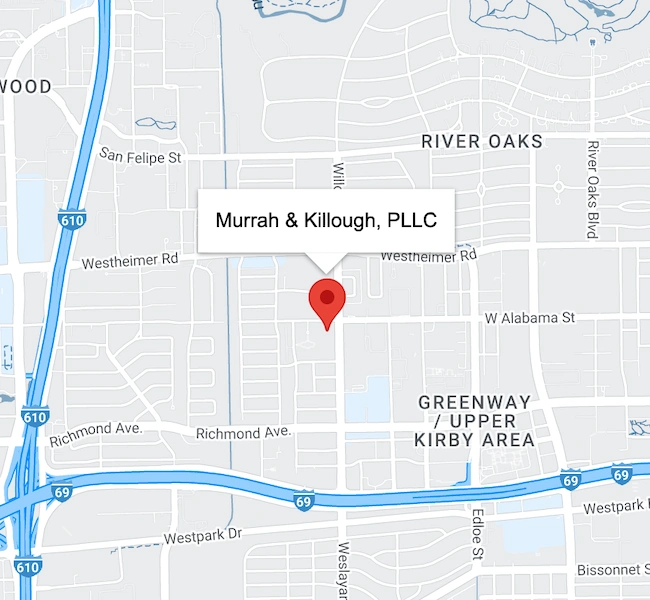
Houston Office
3000 Weslayan St.
Suite 305
Houston, Texas 77027
Phone
281-501-1601
Copyright © 2026 Murrah & Killough, PLLC. All rights reserved.
