

- About Us
- Business Law
- Civil & Commercial
- Antitrust Litigation
- Appellate Litigation
- Banking Litigation
- Breach of Contract
- Breach of Fiduciary Duty
- Business Partnership and Shareholder Disputes
- Commercial Arbitration
- Commercial Fraud
- Construction Litigation
- Employment Litigation
- Insurance Coverage Dispute
- Oil & Gas Litigation
- Pre-Litigation & Dispute Resolution
- Real Estate/Property Dispute
- Trade Secrets & Unfair Competition Litigation
- Family Law
- Resources
- Contact
Our Blog Post
How to Protect Your Business’s Trade Secrets

What Texas Law Expects Before a Dispute Starts
A customer list or pricing model can take years to build and minutes to walk out the door. To protect your business’s trade secrets in Texas, reasonable steps to keep the information secret have to be in place before a dispute begins, because the law protects only information its owner has actually guarded.
What Counts as a Trade Secret Under Texas Law?
Not every piece of confidential information counts. Under Section 134A.002 of the Texas Civil Practice and Remedies Code, information qualifies only if it has value because others do not know it and cannot readily learn it, and its owner has taken reasonable measures to keep it secret.
The definition expressly includes financial data, processes, and lists of actual or potential customers or suppliers, but each still has to pass both tests.
What Are Reasonable Measures to Protect a Trade Secret?
Reasonable measures are everyday practices that limit who can reach your information, including:
- Written agreements: Confidentiality obligations in writing, often through non-disclosure agreements, with employees, contractors, and outside partners.
- Limited access: Access restricted to people whose jobs require it, with a record of who has it.
- Clear marking: Sensitive material labeled and stored so its confidential status is obvious.
- Clean exits: Company devices and accounts recovered, and the obligation restated, when someone leaves.
The law asks for steps that are reasonable under the circumstances, not a fixed checklist. Much of that work lives in your employment agreements and workplace policies.
Does Your Confidentiality Agreement Need a Federal Immunity Notice?
It does if it is an agreement with an employee that governs trade secrets or other confidential information. Section 1833(b) of the Defend Trade Secrets Act protects a person who discloses a trade secret in confidence to a government official or an attorney solely to report or investigate a suspected violation of law, and it requires employers to give notice of that protection in those agreements. Contractors and consultants count as employees for this rule.
An employer that leaves the notice out cannot recover exemplary damages or attorney’s fees under the federal statute against an employee who never received it. The rule covers agreements entered into or updated after May 11, 2016.
What Can You Do If Someone Takes Your Trade Secrets?
Through trade secret and unfair competition litigation, a business can ask a court to stop the misappropriation, meaning the improper taking or use of the information, and to award damages. Under Section 16.010 of the Texas Civil Practice and Remedies Code, the suit generally must be filed within three years after the misappropriation was discovered or reasonably should have been.
Talk With Our Team About How to Protect Your Business’s Trade Secrets
Worrying about what a departing employee or business partner might take is stressful, and much of the protection is decided in drafting and internal process long before any dispute reaches a courtroom.
Our attorneys at Murrah & Killough, PLLC draft the confidentiality and employment agreements behind that protection for Texas businesses. To talk through how to protect your business’s trade secrets, call 281-501-1601 or contact us to have an attorney review your agreements.
Contact Murrah & Killough, PLLC for skilled business law litigation.
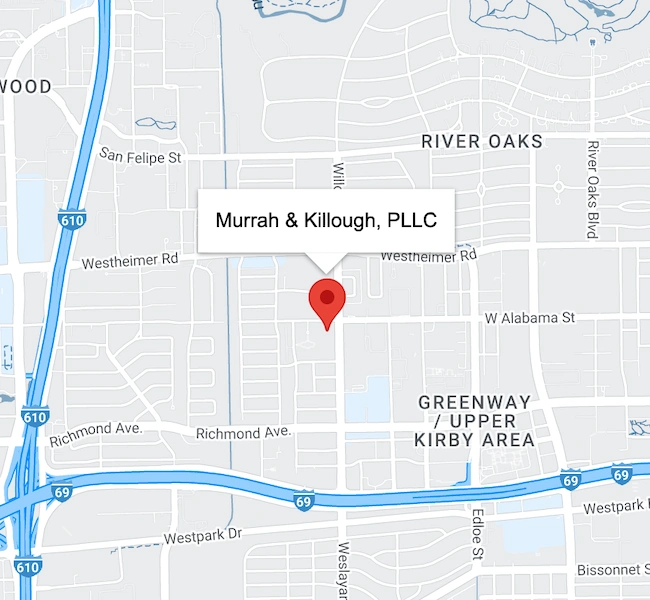
Contact the experienced lawyers at Murrah & Killough, PLLC today & schedule your free consultation. We proudly serve Houston, & all throughout Texas. Visit our law offices at:
Our Houston Office
3000 Weslayan St. Suite 305
Houston, Texas 77027
Phone: (281) 501-1601
Contact Our Team Today!
Fields Marked With An “*” Are Required
"*" indicates required fields

Houston Office
3000 Weslayan St.
Suite 305
Houston, Texas 77027
Phone
281-501-1601
Copyright © 2026 Murrah & Killough, PLLC. All rights reserved.
