

- About Us
- Business Law
- Civil & Commercial
- Antitrust Litigation
- Appellate Litigation
- Banking Litigation
- Breach of Contract
- Breach of Fiduciary Duty
- Business Partnership and Shareholder Disputes
- Commercial Arbitration
- Commercial Fraud
- Construction Litigation
- Employment Litigation
- Oil & Gas Litigation
- Pre-Litigation & Dispute Resolution
- Real Estate/Property Dispute
- Trade Secrets & Unfair Competition Litigation
- Family Law
- Resources
- Contact
How to Dissolve a Business Partnership Gone Wrong
When a Business Relationship Breaks Down in Texas
 Dissolving a business partnership in Texas typically involves reviewing the partnership agreement, gathering financial records, following the winding-up procedures under the Texas Business Organizations Code, and either negotiating an exit or pursuing court involvement when cooperation has broken down. How complicated that process becomes depends on how much the partners disagree, how well the business records were maintained, and whether anyone has already acted in bad faith.
Where to Start When a Partnership Falls Apart
The first place to look is the partnership agreement. That document often controls voting rules, buyout terms, notice requirements, and what happens if one partner wants out while the other wants to continue the business. Texas law also fills in the gaps. For general partnerships, the Texas Business Organizations Code Chapter 152 oversees many issues, including withdrawal, winding up, asset distribution, and settlement of accounts.
Not every breakup requires court involvement. Many end through negotiated buyouts, structured wind-ups, or mediation. Going to court typically becomes necessary when there is a deadlock, missing money, hidden records, or a significant disagreement over value that the parties cannot resolve on their own.
Documents to Gather Before the Split Begins
A breakup usually gets worse when one side starts guessing instead of gathering proof. Before anyone shuts off access, moves funds, or contacts customers, the business should collect records showing what the company owns, what it owes, and what each partner agreed to. Examples include:
- The partnership agreement: Review withdrawal clauses, dispute procedures, and buyout language.
- Financial records: Pull bank statements, tax returns, ledgers, payroll records, and debt documents.
- Ownership proof: Confirm capital contributions, profit shares, and any side agreements.
- Client and vendor files: Identify ongoing contracts, unpaid invoices, and open obligations.
This is often the point where a business partnership dispute lawyer can help prevent the split from turning into claims of misconduct due to lost or destroyed evidence. A sudden lockout, an emptied account, or unauthorized access changes can also become evidence in a broader ownership or fiduciary duty dispute. Access rights often depend on the partnership agreement, the business records, and the partner’s duties under Texas law, none of which disappear simply because the relationship has deteriorated.
What Winding Up Usually Involves
Once dissolution or winding up begins, the goal is not to keep fighting. The goal is to close the business in the right order. Those handling the wind-up must generally gather assets, finish necessary business, pay or provide for creditors, and then settle accounts among the partners. That sequence matters because jumping steps can expose the winding-up partners to personal liability. In a general partnership, partners can be personally liable for the partnership’s debts and obligations, which makes following the correct wind-up sequence more than a procedural formality.
- Collecting assets: Secure cash, receivables, equipment, inventory, and intellectual property.
- Paying obligations: Address taxes, payroll, leases, vendors, and secured debts first.
- Closing commitments: Finish or formally end contracts that cannot stay open.
- Settling between partners: Calculate contributions, distributions, reimbursements, and losses.
Outside creditors take precedence over partner distributions. After debts and obligations are addressed, the remaining amounts are applied through the accounting process between the partners. When that accounting is disputed, the specific terms of the partnership agreement and the financial records gathered early in the process become the foundation for resolving it.
A business partnership dispute lawyer may also need to seek court orders if a partner is hiding records, diverting revenue, or refusing to cooperate with the wind-up. Texas law allows involuntary judicial winding up in some partnership disputes, which can be important when deadlock or misconduct makes a private resolution impossible.
When a Partner Acts in Bad Faith
A lot of partnership breakups go sideways because one side empties an account, starts a competing company too soon, or gives customers a false account of who owns what. These actions can cross into breach of fiduciary duty territory, which carries its own set of legal consequences under Texas law separate from the wind-up process itself.
When that happens, the response needs to be both protective and strategic. Preserving access to records, documenting misconduct as it occurs, and understanding what remedies are available before taking action can determine whether the aggrieved partner walks away with a fair exit or a prolonged dispute. A focused review of the agreement, the books, and the exit timeline can show whether a buyout, negotiated separation, arbitration, or court action makes more sense.
Contact Our Business Lawyers at Murrah & Killough, PLLC
An unfinished partnership breakup can create fresh problems months later through unpaid taxes, vendor claims, customer disputes, or fights over who owns the remaining assets. Murrah & Killough, PLLC handles business disputes throughout the Greater Houston area, including partnership dissolution, breach of fiduciary duty, and ownership conflicts. When pre-litigation resolution is an option, we pursue it first to preserve value and lower the cost of the fight.
If your partnership has reached a breaking point, we can evaluate the status of the dispute and what Texas law allows you to do next. Contact us using our online form or by calling (281) 501-1601.




Contact Our Team Today!
Fields Marked With An “*” Are Required
"*" indicates required fields

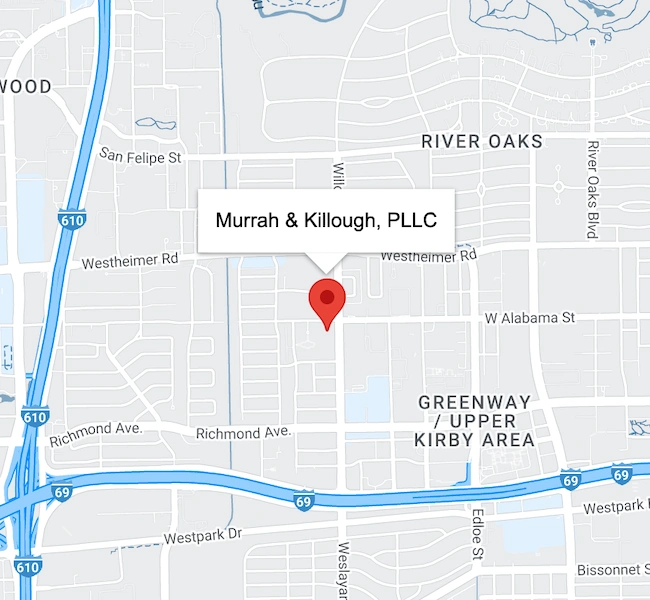
Houston Office
3000 Weslayan St.
Suite 305
Houston, Texas 77027
Phone
281-501-1601
Copyright © 2026 Murrah & Killough, PLLC. All rights reserved.
