

- About Us
- Business Law
- Civil & Commercial
- Antitrust Litigation
- Appellate Litigation
- Banking Litigation
- Breach of Contract
- Breach of Fiduciary Duty
- Business Partnership and Shareholder Disputes
- Commercial Arbitration
- Commercial Fraud
- Construction Litigation
- Employment Litigation
- Oil & Gas Litigation
- Pre-Litigation & Dispute Resolution
- Real Estate/Property Dispute
- Trade Secrets & Unfair Competition Litigation
- Family Law
- Resources
- Contact
What Is a Letter of Intent (LOI) and Is It Binding?
How Letters of Intent Function in Texas Business Deals
 A letter of intent, often called an LOI, is a preliminary document that outlines the key terms of a proposed business deal before the parties sign a definitive agreement. Although typically labeled non-binding, an LOI can still create binding obligations, either through specific provisions the parties intend to enforce immediately or because a court finds that the document itself contains everything needed to form a complete contract.
What Does a Letter of Intent Typically Include?
An LOI generally lays out the major deal points that both sides have agreed to in principle, without going into the level of detail that a final purchase agreement would require. Common elements include:
- The proposed purchase price or valuation range
- The structure of the deal, such as an asset sale or a stock sale
- A proposed timeline from signing the LOI to closing
- An exclusivity period during which the seller agrees not to negotiate with other buyers
- Conditions that still need to be satisfied before a final agreement is signed
Why Most of an LOI Is Meant to Be Non-Binding
Parties typically intend an LOI to serve as a roadmap for negotiation, not as a final commitment to complete the deal. Language stating that the agreement is “subject to” a future definitive agreement, or that certain terms remain open to further negotiation, generally signals that the parties did not yet intend to be bound by the underlying deal terms. This approach lets both sides test whether a deal makes sense before investing in expensive due diligence and drafting a full purchase agreement.
The Provisions That Are Usually Binding Anyway
Even when an LOI states that it is non-binding, certain provisions are typically carved out and enforced immediately. These commonly include:
- Confidentiality obligations covering information shared during negotiations
- An exclusivity or “no-shop” clause preventing the seller from pursuing other buyers
- A statement of which state’s law governs the agreement
- An agreement about who pays certain costs if the deal falls through
- A requirement to negotiate the final agreement in good faith
When Can an LOI Become a Fully Binding Contract?
Texas courts have repeatedly held that an agreement to enter into a future contract is enforceable if it contains all the material terms of the deal, even if the parties expected to sign more formal documents later. If an LOI spells out price, structure, and other essential terms clearly enough, and the parties’ conduct suggests they considered themselves bound, a court may treat the entire LOI as an enforceable contract regardless of how it was labeled.
The risk is not hypothetical. In one well-known Texas case, Texaco, Inc. v. Pennzoil Co.,
a company was found to have entered a binding agreement to acquire another business based largely on a short memorandum of agreement and a public statement describing an “agreement in principle,” despite the fact that a full merger agreement was never signed.
Why Getting the LOI in Writing Matters
Under Texas Business and Commerce Code § 26.01, some contracts and terms have to be in writing to count at all, no matter how clearly both sides meant to be bound by them. That is part of why a well-drafted LOI matters so much: spelling out exactly which provisions are binding and which are not, in writing, is the clearest way to avoid a dispute later over what was actually agreed to.
Getting the Drafting Right
Because the line between binding and non-binding language is not always obvious, an LOI deserves the same careful review as a final purchase agreement, not a quick signature before moving on to due diligence. Even a single missing carve-out or an ambiguous phrase can shift how a court later interprets the entire document. A mergers and acquisitions lawyer regularly drafts and reviews LOIs to make sure clients understand exactly what they are committing to before signing.
Talk to Murrah & Killough, PLLC About Your Letter of Intent
Signing an LOI without understanding which provisions are enforceable can create obligations a party never intended to take on. Our team at Murrah & Killough, PLLC can review your letter of intent and help ensure it accurately reflects your intentions before you sign. Our mergers and acquisitions lawyer team is ready to walk through your specific deal terms with you.
Call 281-501-1601 or fill out an online contact form, and we can talk through what your LOI actually says.




Contact Our Team Today!
Fields Marked With An “*” Are Required
"*" indicates required fields

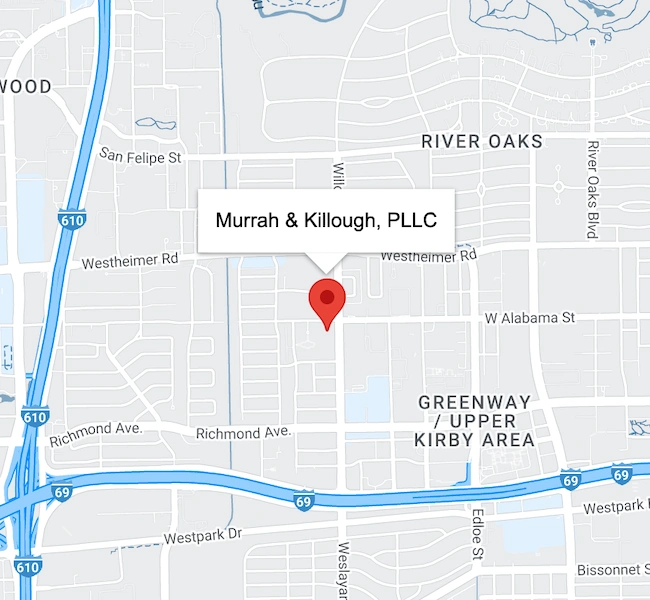
Houston Office
3000 Weslayan St.
Suite 305
Houston, Texas 77027
Phone
281-501-1601
Copyright © 2026 Murrah & Killough, PLLC. All rights reserved.
