

- About Us
- Business Law
- Civil & Commercial
- Antitrust Litigation
- Appellate Litigation
- Banking Litigation
- Breach of Contract
- Breach of Fiduciary Duty
- Business Partnership and Shareholder Disputes
- Commercial Arbitration
- Commercial Fraud
- Construction Litigation
- Employment Litigation
- Oil & Gas Litigation
- Pre-Litigation & Dispute Resolution
- Real Estate/Property Dispute
- Trade Secrets & Unfair Competition Litigation
- Family Law
- Resources
- Contact
Divorce Filing Requirements in Texas
Who Meets Texas’s Requirements for Divorce?
 Before filing for divorce in Texas, a spouse must meet the state’s residency requirements, discussed in detail below. Once those requirements are met, the case is started by filing an Original Petition for Divorce, the document that formally opens the case, with the district or county court, and Texas law requires a 60-day waiting period before a judge can finalize the divorce.
Our team at Murrah & Killough, PLLC guides Texas spouses through every step of the divorce process, from the first filing through the final decree. Call 281-501-1601 or contact our firm to talk through your situation with our team.
Residency Requirements to File for Divorce in Texas
Before a Texas court can hear a divorce case, either spouse must meet the state’s residency rule. Under Texas Family Code § 6.301, a spouse must have lived in Texas for the preceding six months and in the county where the case is filed for the preceding 90 days. Only one spouse needs to satisfy this requirement, so a divorce can still proceed in Texas even if the other spouse lives out of state.
Grounds for Divorce in Texas
Texas allows both no-fault and fault-based grounds for divorce. Common grounds include:
- Insupportability: The marriage has become unsupportable due to conflict or discord, with no reasonable expectation of reconciliation.
- Cruelty: One spouse treated the other in a way that made living together unsupportable.
- Adultery: One spouse committed adultery during the marriage.
- Abandonment: One spouse left with the intention of abandonment and stayed away for at least one year.
- Living apart: The spouses lived apart without cohabitation for at least three years.
Most Texas divorces are filed on the no-fault ground of insupportability, since it does not require proving specific misconduct.
The 60-Day Waiting Period
 Texas Family Code § 6.702 requires at least 60 days between the date a divorce petition is filed and the date a court can grant the divorce. This waiting period applies even when both spouses agree on every issue, and it exists to give couples a final opportunity to reconsider before the marriage is legally dissolved. In certain cases, such as those involving family violence, the court may waive this waiting period.
Documents and Forms You Will Need
Filing for divorce in Texas requires more than the initial petition. Depending on your situation, you may need:
- Original Petition for Divorce: States the grounds for divorce and any other relief being requested.
- Financial disclosures: Documentation of income, property, and debts for cases involving shared assets.
- Parenting-related forms: Additional filings required when the divorce involves minor children.
You should not attempt to file any of these forms on your own. Mistakes can lead to the court rejecting your documents, delaying your divorce case.
Why Choose Murrah & Killough, PLLC for Your Divorce
 Filing for divorce means handling court deadlines, financial disclosures, and, in many cases, disagreements over property or children, all while managing the rest of your life. Our divorce attorneys work to keep the process organized and moving forward, explaining each requirement in plain language and keeping you informed at every stage. We focus on resolving disputes efficiently, but we prepare every case as if it may need to go before a judge.
Frequently Asked Questions About Texas Divorce Requirements
When Should You File Your Divorce Petition?
Filing before you and your spouse have reached even a rough understanding on property, custody, or support can sometimes make negotiations more adversarial than they need to be. Speaking with an attorney before you file helps you understand what to expect, gather the right financial documentation in advance, and decide whether it makes sense to try to resolve some issues informally first or file promptly and negotiate through the court process.
What Happens If Your Spouse Does Not Respond to the Divorce Petition?
If your spouse is properly served with the petition and does not file an answer, the court may grant a default judgment, meaning the judge can grant the divorce on the terms you requested without your spouse’s input, once the 60-day waiting period ends. Proper service must be completed and documented with the court before a default judgment can be granted.
Do Both Spouses Have to Agree to the Divorce?
No. A court can grant a divorce even if one spouse does not want it, as long as the residency and waiting period requirements are met.
Talk to Murrah & Killough, PLLC About Your Divorce
Filing requirements are only the first step in a Texas divorce, and getting them right matters for everything that follows. Our attorneys at Murrah & Killough, PLLC are ready to walk you through your filing and build a plan for the rest of your case. Call 281-501-1601 or contact our firm to get started.




Contact Our Team Today!
Fields Marked With An “*” Are Required
"*" indicates required fields

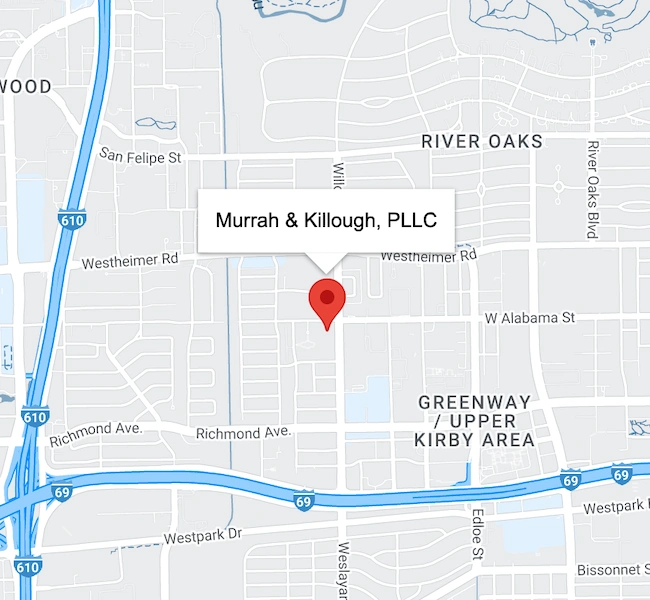
Houston Office
3000 Weslayan St.
Suite 305
Houston, Texas 77027
Phone
281-501-1601
Copyright © 2026 Murrah & Killough, PLLC. All rights reserved.
