

- About Us
- Business Law
- Civil & Commercial
- Family Law
- Resources
- Contact
Houston Business Partnership and Shareholder Disputes Lawyer
Protecting Your Business Interests in Partnership and Shareholder Conflicts
 Maintaining smooth partnerships and shareholder relations is key to success in Houston’s busy business world. Disagreements can arise, threatening your business’s stability and growth. At Murrah & Killough, PLLC, we are dedicated to resolving these issues with skill and commitment.
Our lawyers understand the details of partnership and shareholder disputes and are focused on protecting your business interests. Whether dealing with breaches of fiduciary duty, management standstills, or claims of unfair treatment of minority shareholders, we offer tailored legal solutions to help your business thrive.
Our skilled business litigation attorneys are ready to help safeguard your business and achieve positive results. Call us now to schedule a consultation and take the first step toward effectively resolving your partnership and shareholder disputes.
Contact Murrah & Killough, PLLC today at 281-501-1601.
Understanding Business Partnership and Shareholder Disputes
Business partnerships and shareholder disputes can come in many forms, often fueled by personal emotions like stress and conflict. These disputes can harm businesses, affecting their operations and reputations. Common partnership disputes arise from:
- Differences in goals, management styles, and personalities among partners or shareholders
- Financial disagreements over profit sharing and dividend distribution
- Conflicts over business strategies and visions for the company’s future
- Miscommunication and personal conflicts among stakeholders
- Breaches of fiduciary duties, such as misappropriation of funds or conflicts of interest
- Contract conflicts and disagreements over asset use
- Management deadlocks that stall business operations
- Disputes related to buy-sell agreements and ownership transfers
- Minority shareholder oppression claims due to unfair treatment by majority shareholders
- Breach of contract claims regarding roles and responsibilities within the business
Serious financial consequences, including high costs and personal liability, can result from these shareholder disputes. In extreme cases, these disputes can lead to business dissolutions, causing major disruption to the company’s operations. Addressing these issues quickly is important to ensure the ongoing success and viability of the business.
How Partnership and Shareholder Disputes Arise
Disputes among partners and shareholders can happen for many reasons. Financial disagreements often focus on how profits and dividends are shared. Sometimes, one party may benefit at another’s expense without a clear contract, leading to disputes over profit sharing. These financial issues can put a strain on business relationships and disrupt operations.
Shareholder disagreements often come from different ideas about business strategies and visions, causing conflict over the company’s future. Differences in management styles can lead to disputes, especially if there’s a clash between authoritative and cooperative approaches. Communication breakdowns and personal conflicts can increase tensions and lead to shareholder disputes.
Interference with business agreements through pressure or misleading actions can lead to claims of wrongful interference among partners. Additionally, breach of contract claims often cause disputes between partners due to disagreements over roles and responsibilities in the business.
How Do Partnership and Shareholder Disputes Impact Business Operations?
Partnership and shareholder disputes can have significant repercussions on a business’s day-to-day operations, profitability, and overall stability. In the short term, these disputes may lead to disruptions in daily activities, as management focuses on resolving conflicts rather than driving the business forward. Decision-making processes can become stalled, causing delays in business operations and negatively affecting productivity.
Financially, disputes can lead to increased legal costs and potential financial losses, impacting the company’s bottom line. The uncertainty surrounding ongoing disputes may also deter potential investors or partners, affecting the company’s ability to secure funding or expand its market presence.
In the long term, unresolved disputes can erode trust among business partners and shareholders, leading to a breakdown in communication and collaboration. This erosion can weaken the company’s strategic direction and hinder its ability to adapt to market changes. Prolonged disputes may also result in the loss of key personnel, as the work environment becomes strained and morale declines.
Ultimately, the stability of the company is at risk if disputes lead to business dissolutions or significant restructuring. Businesses must address partnership and shareholder disputes promptly and effectively, ensuring minimal disruption to operations and safeguarding the company’s long-term success and viability.
Importance of Written Agreements
Having detailed written agreements prevents disputes and provides a clear framework for resolving conflicts. A shareholder agreement helps clarify roles and responsibilities, reducing potential conflict areas. A formal partnership agreement outlines each partner’s intentions and the terms of the partnership, ensuring everyone is on the same page. These agreements can reduce legal costs by minimizing uncertainties during disputes.
Written agreements allow partners to maintain control over the continuation or ending of the partnership under certain conditions, providing stability and predictability in the business relationship.
Types of Partnership and Shareholder Disputes We Handle
At Murrah & Killough, PLLC, we handle many partnership and shareholder disputes. Our business disputes attorneys are skilled at handling these disputes, ensuring that our client’s interests are protected and their business relationships are preserved. We represent clients across various industries, including service industries, healthcare practices, and manufacturing. By understanding the unique dynamics of each case, we provide tailored solutions to resolve these disputes effectively.
Breach of Fiduciary Duty
A breach of fiduciary duty occurs when a partner or shareholder fails to act in the best interests of the partnership or corporation. This breach can involve actions such as misappropriation of funds, conflicts of interest, or failure to disclose important information. Such misconduct can severely disrupt business operations and lead to legal disputes.
Partners are legally obligated to act in the best interests of the partnership. When a partner fails to uphold these fiduciary duties, it often leads to significant disputes. Breaches of fiduciary duty can complicate the partnership dynamics and may result in personal liability for the offending partner. In severe cases, a breach of fiduciary duty can lead to the dissolution of the partnership. Partners must remain vigilant and maintain a transparent, mutual business relationship to prevent such breaches.
When a breach occurs, taking legal action is necessary to protect the interests of all parties involved and to safeguard the business’s future.
Management Deadlocks
Deadlocks occur when management teams cannot reach a consensus on critical business decisions, often requiring legal intervention to resolve the impasse. These deadlocks can stall business operations and lead to significant financial losses. When management deadlocks arise, they can negatively affect the company’s operations, potentially causing disruptions that impact the bottom line.
Legal remedies, including mediation and arbitration, can offer a structured approach to resolving these disputes, allowing businesses to move forward with clarity and purpose. By addressing management deadlocks proactively, businesses can maintain stability and continue their operations without unnecessary interruptions.
Buy-Sell Agreement Conflicts
Buy-sell agreements are legally binding contracts that outline the terms and conditions for the transfer of ownership interests in a business. These agreements manage how ownership shares can be bought or sold, particularly in the event of a partner’s departure, death, or retirement. They help prevent disputes by providing clear guidelines on who can purchase shares, how the value of shares is determined, and the payment terms involved. By establishing a structured process for ownership transitions, buy-sell agreements protect the interests of all parties involved and ensure the stability and continuity of the business.
Disputes can arise when there are disagreements on specific conditions outlined in these agreements. For instance, conflicts may occur over who can buy a shareholder’s stock, the company’s obligations to buy out a shareholder, value measurement, and payment terms. These conflicts can strain business relationships and disrupt the company’s operations.
In such cases, the involvement of a shareholder disputes lawyer may be necessary to settle breaches of contract and other related issues. Good faith negotiations and mediation can often resolve these conflicts, but arbitration or litigation may be required when parties cannot reach an agreement.
Minority Shareholder Oppression Claims
A minority shareholder is an individual or entity that owns less than 50% of a company’s shares. This means they do not have a controlling interest or significant influence over the company’s decisions and operations.
Minority shareholders might sometimes experience unfair treatment from those who hold the majority of shares, leading to legal claims of oppression. In Texas, those with majority shares must treat minority shareholders fairly and protect their rights. These legal actions can address problems like being left out of decision-making, not getting access to financial information, and unfair dividend payments. By holding majority shareholders responsible, minority shareholders can safeguard their interests and ensure their rights are respected within the company.
Protecting Your Rights
As a Partner
Understanding and protecting your rights will maintain a fair and productive business relationship. Partners have the right to access company records and financial statements, ensuring transparency and accountability within the partnership. This access helps partners make informed decisions about the business’s operations and future direction.
Partners are entitled to a fair share of the profits, and if these rights are violated, legal action can be taken to resolve disputes over profit distribution. In cases where partners face unfair treatment or breaches of fiduciary duty, they can seek legal remedies to address these issues and protect their interests.
Partners to uphold fiduciary duties, acting in the best interests of the partnership. By being aware of their rights and responsibilities, partners can prevent conflicts, foster a cooperative environment, and contribute to the partnership’s success.
As a Shareholder
In Texas, shareholders who have held shares for at least six months or own 50% or more can request access to company records, ensuring transparency and accountability from the company.
Shareholders are entitled to a fair share of the company’s profits. If a shareholder’s rights are disregarded, they can pursue legal action to demand payment of dividends or other remedies. Minority shareholders, in particular, can hold majority shareholders accountable and seek legal assistance if treated unfairly.
Majority shareholders must treat minority shareholders fairly and protect their interests. Board members must provide crucial information to shareholders and ensure financial responsibility. Minority shareholders can petition the court to appoint a receiver to address issues with majority shareholders, safeguarding their rights.
What Steps Should I Take If I Suspect Mismanagement or Fraud in My Business?
Suspecting mismanagement or fraud within your business can be alarming, but taking immediate and strategic action is crucial to protect your interests. Here are the steps you should consider:
- Document and Gather Evidence: Start by collecting all relevant documents, emails, financial records, and any other evidence that supports your suspicions. This documentation will be essential in building a case and understanding the extent of the issue.
- Consult with Experienced Legal Counsel: Seek advice from a business attorney who handles partnership and shareholder disputes. A lawyer can provide guidance on your legal options, help assess the situation, and advise on the best course of action to protect your business interests.
- Conduct an Internal Investigation: If possible, initiate an internal investigation to further understand the scope of the mismanagement or fraud. This can involve reviewing financial records, interviewing employees, and assessing internal controls.
- Consider Mediation or Negotiation: Before escalating the issue to litigation, explore mediation or negotiation as potential avenues for resolving the dispute. These methods can offer effective solutions while preserving business relationships and avoiding the costs and complexities of court proceedings.
- Prepare for Litigation if Necessary: If mediation or negotiation fails, be prepared to pursue litigation. Your legal counsel will help you understand the implications and potential outcomes, ensuring you are ready to take legal action if needed.
- Review and Strengthen Internal Controls: Regardless of the result, it’s important to review and strengthen your internal controls to prevent future incidents. Implementing robust policies and procedures can help safeguard your business from potential mismanagement or fraud.
By taking these steps, you can address suspicions of mismanagement or fraud effectively, protecting your business’s stability and future. Consulting with legal professionals and considering all available options will ensure you are well-prepared to handle the situation.
Legal Remedies for Resolving Disputes
When disputes arise among partners and shareholders, there are different legal ways to solve them. Partnership agreements may require mediation or arbitration, which are enforceable unless partners decide otherwise. These methods can help maintain business relationships and avoid the costs and complications of going to court.
However, if attempts to resolve disputes outside of court don’t work, litigation might be needed. Each partnership dispute may need different strategies based on the specific situation, balancing costs and benefits.
Negotiation and Mediation
Starting mediation early can make it more effective in resolving disputes. Using a mediator can improve communication among partners and help them reach a mutually acceptable resolution during disputes. Mediation is flexible and aims to help partners find a solution that works for everyone. This method allows for creative solutions and can help preserve business relationships by avoiding the confrontational nature of litigation.
In cases where business partners can no longer work together, a buy-out can be helpful, allowing the business to continue under new terms. Good faith negotiations and mediation can lead to practical solutions that address everyone’s needs and interests, ensuring the business’s continued success.
Arbitration and Litigation
Arbitration provides a binding resolution, unlike mediation where the outcome is not guaranteed. It offers a straightforward way to resolve partnership disputes, focusing on practical solutions that consider both parties’ interests. Arbitration can be an effective way to solve disputes without long and costly court proceedings.
Sometimes, partners may need to go to court instead of arbitration or mediation, especially for urgent matters. For serious disputes, partners might consider ending the partnership, either voluntarily or through court intervention. With the help of legal guidance, partners can look at these options and choose the best course of action for resolving their disputes.
Our Approach to Resolving Disputes
At Murrah & Killough, PLLC, we focus on finding the best solutions to protect our clients’ interests. We take the time to understand each client’s situation and create strategies that fit their needs. We consider all legal options, including negotiation, mediation, and court action, to find the best way to resolve partnership and shareholder disputes.
Our Houston business dispute attorneys use creative methods and experienced advocacy to settle disputes quickly. We aim to protect our clients’ interests and maintain their business relationships, allowing them to keep running smoothly. By working closely with our clients, we provide the support and guidance they need to handle complex business disputes and reach positive results, building a strong attorney-client relationship.
Contact Murrah & Killough, PLLC to Confidently Handle Business or Shareholder Disputes
Murrah & Killough, PLLC is ready to help businesses deal with partnership and shareholder disputes. Our firm is committed to providing excellent legal advice, using our extensive experience to offer solutions tailored to your business needs. We understand that each dispute is different and requires a strategic approach for the best outcome.
Here’s how we can assist you:
- Comprehensive Legal Services: Our attorneys handle a wide range of disputes, including minority shareholder oppression claims, breaches of fiduciary duty, management deadlocks, and buy-sell agreement conflicts. We work hard to protect your interests and resolve conflicts quickly.
- Strategic Negotiation and Mediation: We focus on good faith negotiations and mediation to reach friendly resolutions that keep business relationships intact and avoid the costs of court battles. Our approach encourages open communication and creative problem-solving, ensuring your business continues to succeed.
- Aggressive Litigation and Arbitration: When disputes can’t be settled through negotiation, our skilled litigators are ready to represent you in court or arbitration. We offer strong advocacy to protect your rights and achieve positive results, whether through court action or alternative dispute resolution methods.
- Tailored Legal Solutions: By acting as your outside general counsel, we provide practical and insightful legal advice, ensuring our strategies match your business goals. We customize our services to fit your business’s unique strategies and objectives, offering a level of service and dedication that stands out.
- Additional Business Services: Beyond resolving disputes, we help draft and review shareholder agreements, partnership agreements, and buy-sell agreements to prevent future conflicts. Our proactive approach helps you maintain control over your business operations and ensures compliance with Texas law.
At Murrah & Killough, PLLC, we see ourselves as part of your team, working together to achieve your business goals. Our commitment to building long-lasting relationships with our clients means you can trust us to handle your business disputes with care and professionalism.
Contact Murrah & Killough, PLLC today at 281-501-1601 to schedule a consultation and learn how our legal counsel can help protect your business interests and ensure your continued success.
Additional Resources




Contact Our Team Today!
Fields Marked With An “*” Are Required
"*" indicates required fields

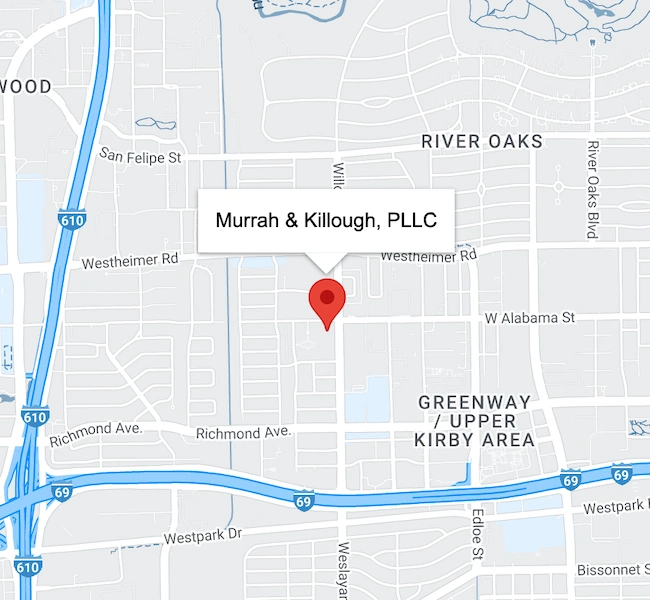
Houston Office
3000 Weslayan St.
Suite 305
Houston, Texas 77027
Phone
281-501-1601
Copyright © 2026 Murrah & Killough, PLLC. All rights reserved.
