

- About Us
- Business Law
- Civil & Commercial
- Family Law
- Resources
- Contact
Fort Bend Family Law Attorney
Legal Support for Family Law Matters in Fort Bend County
 Need help with a family law issue in Fort Bend County? Whether you’re facing a divorce, dealing with child custody battles, or seeking spousal support, an experienced Fort Bend family law attorney can provide the guidance you need. At Murrah & Killough, PLLC, your family’s legal needs are our top priority.
As a leading Fort Bend family law attorney firm, we understand that dealing with family law matters can be challenging and emotional. We are committed to providing personalized solutions tailored to your unique situation, ensuring your rights are protected and your family’s best interests are prioritized.
Let us be your trusted partner in finding a positive resolution for your family law matters and call Murrah & Killough, PLLC today at 281-501-1601 for a consultation. Our dedicated family law attorney is ready to guide you every step of the way, offering the support and advocacy you need to move forward with confidence.
We proudly extend our services to clients throughout the Greater Houston Area including Harris County, Fort Bend County, and Montgomery County, ensuring that you have the support you need during this critical juncture in your life.
Comprehensive Family Law Services in Fort Bend County
When it comes to family law matters, there’s a wide range of services available in Fort Bend County. Law firms offer services to address every part of family law issues:
- Divorce
- Child Custody and Visitation
- Child Support
- Spousal Support
- Property Division
- Establishing Paternity
- Addressing Domestic Violence Issues
- Modifying Existing Court Orders
- Prenuptial Agreements
- Postnutial Agreement
An experienced family law attorney helps to achieve favorable outcomes while minimizing emotional and financial stress during these legal proceedings by ensuring preparedness for every step of the legal process.
In Fort Bend County, TX, family law practice focuses on resolving legal issues while prioritizing the well-being of all parties involved, particularly children. Family law attorneys provide personalized attention and tailored solutions, making challenging times more manageable for you and your family. These comprehensive services assist you throughout the family law process, protecting your rights and interests every step of the way.
Understanding the Divorce Process in Fort Bend County
Filing for divorce in Fort Bend County involves several critical steps and requirements.
- Meet Residency Requirements: Ensure that one spouse has lived in Texas for at least six months and in Fort Bend County for a minimum of 90 days before filing for divorce.
- File the Divorce Petition: Submit the document to initiate the divorce process.
- Serve the Other Spouse: The other spouse must be formally served with the divorce petition or service can be waived by the other spouse.
- Agree on Divorce Terms: If both spouses agree on the terms, they can present their agreement to the court for approval, often leading to a quicker and more amicable process.
- Resolve Disputes: In cases where disputes arise, the process may involve negotiations or court proceedings to address issues like child custody, child support, spousal support, and property division.
- Court Approval: Once all terms are agreed upon or decided by the court, the final divorce decree is issued, concluding the divorce process.
Prenuptial and Postnuptial Agreements
Prenuptial and postnuptial agreements are legal contracts that outline the division of assets and financial responsibilities in the event of divorce or death. A prenuptial agreement is established before marriage, allowing couples to define terms regarding property division, spousal support, and other financial matters, thereby providing clarity and protection for both parties. Conversely, a postnuptial agreement is formulated after marriage and serves a similar purpose, enabling couples to address financial arrangements that may have evolved during the marriage.
In the context of divorce, these agreements can significantly streamline the process by clearly outlining each party’s rights and obligations, potentially reducing conflicts and legal expenses. However, for a prenuptial or postnuptial agreement to be enforceable in Texas, it must meet specific legal standards, including full disclosure of assets by both parties and the absence of coercion or duress during its execution. Engaging with an experienced family law attorney is crucial to ensure that these agreements are properly drafted and legally sound.
At Murrah & Killough, PLLC, we specialize in assisting clients with the preparation and review of prenuptial and postnuptial agreements. Our goal is to provide personalized legal guidance that reflects your unique circumstances, ensuring that your interests are protected and that any agreements comply with Texas law. By addressing these matters proactively, we help our clients establish a solid foundation for their marital relationships and offer peace of mind regarding their financial futures.
Community Property and Marital Asset Division
 Texas follows the community property principle, meaning that any assets earned during the marriage are equally shared between spouses. This includes wages, income, and property acquired during the marriage, except for items classified as separate property. In Fort Bend County, assets are presumed to be community property unless proven otherwise.
For example, if one spouse owned a property before the marriage and can provide documentation such as a deed or mortgage statement showing sole ownership, this asset may be classified as separate property. Similarly, inheritances or gifts received by one spouse during the marriage can be considered separate property if there is clear evidence supporting this claim.
The Texas Family Code outlines detailed rules for property division in divorce cases. Courts have the authority to assess the value of both community and separate property to ensure a fair distribution. Special circumstances, such as cruelty or child abuse, may lead judges to alter the standard division of assets.
Spousal Maintenance
Spousal support and maintenance are financial payments made by one spouse to the other following a divorce. The purpose of spousal support is to provide financial assistance to the lower-earning or non-earning spouse, ensuring they can maintain a reasonable standard of living post-divorce. This support is particularly helpful when the marriage has lasted a significant amount of time, and the recipient spouse may lack sufficient income or property to meet their needs independently.
Spousal maintenance aims to bridge the financial gap during the transition to single life, allowing the recipient spouse time to gain employment or further their education if necessary. It is designed to help achieve financial stability and self-sufficiency for the recipient, reflecting their financial situation and legal rights accurately.
Spousal support in Texas is not automatically granted and typically requires the marriage to have lasted at least ten years, with the recipient lacking adequate income or property.
The maximum amount of court-ordered spousal maintenance is capped at $5,000 per month or 20% of the payer’s average monthly gross income, whichever is lower. Please note that the amounts and percentages mentioned are subject to change, as they may be influenced by new legislation or amendments to existing laws.
Child Custody Issues and Resolutions
Child custody can be one of the most contentious aspects of a divorce. In Texas, the default arrangement is joint custody, legally referred to as conservatorship. This means that both parents share the rights and responsibilities of raising their child.
However, joint custody does not necessarily mean that the child will spend equal time living with each parent. Typically, one parent is designated as the primary custodian, determining where the child primarily resides, while the other parent is granted visitation rights. Being named joint managing conservators doesn’t necessarily mean both parents have equal decision-making authority or parenting time. The possession and access schedule, which outlines when each parent has physical custody of the child, is determined separately.
If one parent is deemed unfit or if there are concerns such as domestic violence or child abuse, the court may grant sole custody or conservatorship to the other parent to ensure the child’s safety and well-being. Judges consider various factors when making custody decisions, including the child’s best interests and each parent’s ability to make sound decisions.
In situations involving child abuse or other harmful conditions, custody arrangements can be tailored to provide safety and stability for the children. Post-divorce modifications related to custody can also be facilitated to adapt to changing circumstances, ensuring that the children’s needs are consistently met.
Establishing and Modifying Child Support
 Child support is a financial obligation paid by one parent to the other to ensure the well-being and proper upbringing of their child. It is typically used to cover essential expenses such as housing, food, clothing, healthcare, education, and other necessities that contribute to the child’s overall quality of life.
In most cases, the non-custodial parent, who does not have primary physical custody of the child, is responsible for making child support payments to the custodial parent. This ensures that both parents contribute to the financial needs of their children, even if they are no longer together. Child support is crucial in providing stability and meeting the child’s needs, and it is often determined based on the paying parent’s income and the child’s requirements.
If there are significant changes in personal circumstances, individuals can request a modification of their child support order. To initiate this process, a formal request must be submitted to the Court or the Child Support Division, and only one request should be made at a time to avoid delays.
The courts may consider several reasons for modifying child support, including:
- A substantial change in the paying parent’s income
- Significant changes in the child’s needs, such as medical or educational expenses
- Changes in custody arrangements
- The paying parent has additional children to support
- A substantial change in the cost of living
Child support and the modification process are important and ensure children’s needs are consistently met.
Divorce Mediation Services
Mediation is a structured process where a neutral third party, known as a mediator, assists disputing parties in resolving their conflicts through open communication and negotiation. This voluntary and confidential method focuses on finding mutually agreeable solutions, often resulting in a more amicable and cost-effective outcome compared to traditional court proceedings. Mediation is particularly beneficial in family law cases, such as divorce, child custody, and spousal support, as it encourages cooperation and prioritizes the best interests of all involved, especially children.
Divorce mediation can greatly reduce the emotional stress often linked with divorce. It is particularly useful for resolving custody arrangements and other sensitive matters peacefully. Mediation helps ensure that both parties can move forward amicably, focusing on the best results for their family.
Contact a Fort Bend Family Law Attorney from Murrah & Killough, PLLC Today
Handling family law matters can be challenging, but the team at Murrah & Killough, PLLC is here to help. Located in Houston, our firm offers comprehensive legal support for a wide range of family law issues. Whether you’re dealing with a complex divorce, child custody disputes, or spousal support arrangements, our skilled attorneys provide personalized solutions tailored to your situation.
How We Can Help You:
- Family Law Services: Our services include divorce, child custody, child support, spousal support, property division, and more. We are committed to protecting your rights throughout the legal process.
- Personalized Attention: We understand that every family law matter is different. Our attorneys offer individualized attention, ensuring that you get the guidance and support needed for the best outcome.
- Experienced Guidance: With our extensive knowledge of Texas law, we help you make informed decisions, avoid costly mistakes, and protect your interests.
- Dedicated Advocacy: As your committed advocates, we work diligently to represent your interests, whether in negotiations, mediation, or court proceedings.
- Additional Services: Beyond traditional family law matters, we also help with establishing paternity, addressing domestic violence issues, and modifying existing court orders to reflect changes in circumstances.
Our goal is to make dealing with family law issues as smooth and stress-free as possible. By choosing Murrah & Killough, PLLC, you are selecting a team that prioritizes your well-being and strives for the best possible results.
Contact us today at 281-501-1601 for a consultation and take the first step toward resolving your family law matters with confidence and peace of mind.
Frequently Asked Questions about Family Law in Fort Bend, Texas
What is the process for filing for divorce in Fort Bend County?
To initiate a divorce in Fort Bend County, one spouse must file a petition with the district court. The petitioner must have been a resident of Texas for at least six months and a resident of Fort Bend County for at least 90 days prior to filing. The court will then schedule hearings to address issues such as property division, child custody, and support.
How is property divided in a Texas divorce?
Texas is a community property state, meaning that assets and debts acquired during the marriage are considered jointly owned and are subject to equitable division upon divorce. The court aims to divide property in a manner that is just and right, which may not necessarily be an equal split.
What factors does the court consider when determining child custody?
The court considers various factors, including the child’s age, health, and emotional needs; the parents’ ability to provide for the child; the child’s preference if they are of sufficient age and maturity; and any history of abuse or neglect. The primary goal is to serve the best interests of the child.
Can child support orders be modified after they are established?
Yes, child support orders can be modified if there is a substantial change in circumstances, such as a significant change in income, employment status, or the needs of the child. A petition must be filed with the court to request a modification.
For personalized assistance with family law matters, including prenuptial and postnuptial agreements, contact Murrah & Killough, PLLC. Our experienced attorneys are here to provide the guidance and support you need during this challenging time.
Contact Our Team Today!
Fields Marked With An “*” Are Required
"*" indicates required fields

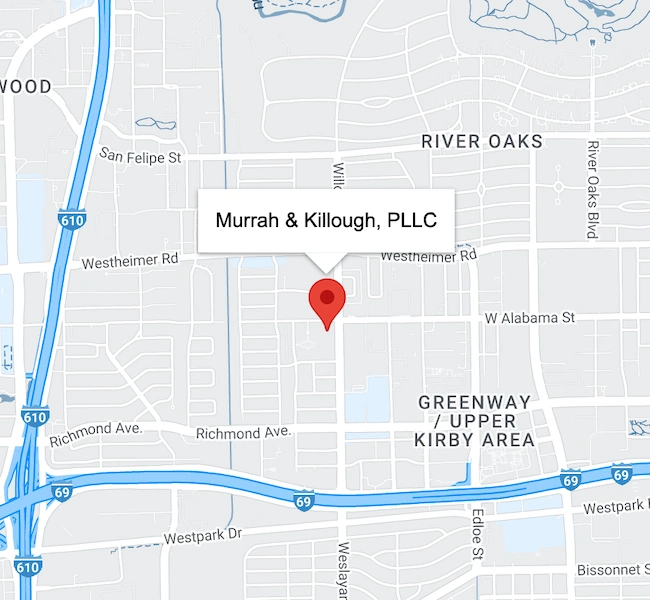
Houston Office
3000 Weslayan St.
Suite 305
Houston, Texas 77027
Phone
281-501-1601
Copyright © 2026 Murrah & Killough, PLLC. All rights reserved.
