

- About Us
- Business Law
- Civil & Commercial
- Family Law
- Resources
- Contact

Seeking a seasoned Houston estate planning attorney to protect your assets and ensure your wishes are honored? Our Texas estate planning attorneys at Murrah & Killough, PLLC create customized estate plans that not only reflect your unique desires but also adapt to the evolving legal landscape. Let us guide you through the process, providing peace of mind for both you and your loved ones.
When you work with Murrah & Killough, PLLC, you’re not just getting legal assistance; you’re gaining a dedicated partner in securing your legacy. Our team of Houston estate planning lawyers is committed to understanding your individual needs and tailoring comprehensive solutions that stand the test of time. Whether it’s drafting wills, establishing trusts, or navigating complex probate processes, we are here to guide you every step of the way. Don’t leave the future of your estate to chance—take control with Murrah & Killough, PLLC. Contact us today at 281-501-1601 for a personalized consultation and let us help you build a solid foundation for the legacy you wish to leave behind. Your peace of mind starts here.
We are dedicated to serving clients across Texas, including Harris County, Fort Bend County, and Montgomery County.
Understanding Estate Planning in Houston, TX
 Estate planning is the strategic process of managing assets, minimizing taxes, and ensuring your property is distributed according to your wishes after your passing. It’s like a roadmap, guiding your loved ones through the complex terrain of legal and financial matters during a challenging time. But this journey isn’t just about what happens after you’re gone. It’s also about ensuring the future of those who depend on you, physically and financially, during your lifetime.
The terrain we navigate in estate planning varies from person to person. Each individual’s situation is unique and requires a tailored approach. That’s where experienced estate planning attorneys from Murrah & Killough, PLLC come in. An experienced estate planning attorney plays a vital role in:
- managing the estate effectively
- sidestepping common mistakes
- making sure your estate plan mirrors significant life changes, like marriage, childbirth, or asset acquisition.
Remember, estate planning in Houston isn’t a one-off task, but a journey that needs to be revisited regularly to reflect your changing circumstances.
Crafting Your Estate Plan with a Houston Lawyer
The journey of estate planning requires a reliable guide, and who is better than an estate planning lawyer or a probate lawyer in a Houston law firm such as Murrah & Killough, PLLC? With their comprehensive knowledge of Texas estate law, they can help craft an estate plan that meets individual and family needs. This plan includes legal documents such as wills, trusts, and powers of attorney, each tailored to your unique situation.
From the initial consultations to the preparation of necessary documents, our Houston estate planning attorney is your ally, assisting you through every aspect of the estate planning process. However, the process does not stop there. It’s of utmost importance to continue reviewing and updating these documents, maintaining their relevance to your evolving circumstances.
Dissolution of Marriage and Estate Plans
The journey of life is unpredictable, and sometimes it includes the difficult terrain of divorce or annulment. These events automatically nullify provisions in a will that favor an ex-spouse in Texas, including mentions as a beneficiary or executor. Without proper updates to your estate plan, assets designated for a former spouse in a will may pass to the next beneficiary, resulting in unintended consequences.
To circumvent potential complications from ex-spouses or other family members, it’s imperative to amend your will after a divorce. This involves reviewing current provisions, executing a new will or codicil, and ensuring it is witnessed and stored securely. Further, it’s paramount to refresh beneficiary designations on life insurance and other financial accounts, in tandem with the nomination of executors and guardians for children.
Texas law allows individuals the flexibility to include or exclude ex-spouses and former stepchildren in their wills, depending on current wishes and relationships. Speak with one of our Houston estate planning attorneys at Murrah & Killough, PLLC for more information.
Asset Protection Strategies
Asset protection is like building a fortress around your wealth, safeguarding it from potential threats such as creditors and liabilities. One of the most effective strategies to achieve this is through Asset Protection Trusts (APTs). These tools legally transfer ownership to a trust, protecting assets from creditors, with types including Domestic, Foreign (Offshore), and Medicaid Asset Protection Trusts.
Beyond trusts, forming a Limited Liability Company (LLC) creates a legal separation between your personal and business finances. This strategy protects your personal assets from business liabilities, contingent upon proper recordkeeping and financial independence.
At their core, asset protection strategies provide adaptable solutions catering to a variety of needs, ranging from tax reduction, and bypassing probate to caring for beneficiaries with specific needs.
Ensuring the Welfare of Minor Children
Embarking on the estate planning journey as a parent comes attached with the unique duty of safeguarding the welfare of minor children. This includes appointing a guardian to care for your children if something were to happen to you. The selection of a guardian involves considering the individual’s willingness to serve, their ability to provide care, and how well they can address the unique needs of your family.
Trusts serve as a powerful tool to protect your children’s financial future. Various types of trusts, such as Child’s Trusts, Special Needs Trusts, or Family Pot Trusts, each serve different purposes to benefit minor children. By specifying the conditions under which the trust assets will be distributed, such as based on age or life milestones, you ensure the interest of your children.
Trusts are not exclusive to the wealthy. Trusts are versatile financial tools accessible to various income levels. They offer benefits like asset protection, avoiding probate, and managing inheritances. Creating a trust aligns with diverse financial goals, making it a valuable option for people of various economic backgrounds.
Elder Law Considerations in Estate Planning
As we go through life, our plans for what happens to our belongings should change too. Aging is one such transition. Elder law considerations become crucial in estate planning, including Medicaid planning, long-term care insurance, and successor trustees for asset management.
Embedding these considerations into your estate planning process secures financial wisdom while also concentrating on the welfare and independence of elderly individuals. It’s all about planning for the future with dignity and respect, focusing on the well-being of the individual.
Probate Process Guidance
Probate is a legal process that validates a person’s will and oversees the distribution of a deceased individual’s assets. It starts with filing the will and an application for probate in the probate court of the decedent’s county of residence. A probate hearing is then held before a judge to confirm the decedent’s death, appoint an executor, and validate the will.
The probate process can be a complex journey, filled with potential disputes, such as asset valuation disagreements, creditor claims, or will contests. Executors are responsible for an inventory and appraisal of the estate within 90 days of appointment and for managing the estate’s assets. But you’re not alone in this journey. Probate lawyers from Murrah & Killough, PLLC provide legal representation in probate and ensure that the executor’s actions comply with Texas laws.
Upon settling all debts and legal obligations, our attorneys oversee the final distribution of assets to adhere to the decedent’s wishes. If an estate is not completed within 15 months, the court may demand an accounting of all estate assets, debts, and expenses. However, having a small estate may qualify for an expedited probate process or exemption.
Estate Planning for Blended Families
Blended families present a unique terrain in the journey of estate planning. With multiple relationships and interests to consider, these families require specific estate planning to ensure fair asset distribution. A key part of this process is asset characterization, which involves identifying different types of properties that include community, separate, and commingled assets.
Treading this intricate landscape can be formidable, but with professional advice from Murrah & Killough, PLLC, blended families can guarantee that asset distribution aligns with the individuals’ intentions. Reviewing and updating estate planning documents, including wills and trusts, and considering a prenuptial agreement are recommended to ensure asset distribution aligns with the desired outcomes following remarriage.
Legal Authority in Health Care Decisions
In the course of estate planning, guaranteeing your healthcare decisions are upheld is of utmost importance. This is achieved by creating legal documents such as advance directives and living wills. These documents outline the treatments you wish to receive, or not receive, in life-threatening situations when you are incapacitated.
Another critical aspect is the healthcare power of attorney (HCPA), which designates a trusted person to make healthcare decisions on your behalf if you are unable to do so. Without an advance directive in Texas, state law dictates a hierarchy of individuals who can make healthcare decisions on your behalf, starting with your spouse. Therefore, creating these documents as part of your estate plan can ensure your healthcare preferences are respected, reducing potential family disputes.
Tax Implications
Tax implications constitute a crucial aspect of the estate planning process. With the right guidance from attorneys, high net-worth individuals and families can reduce their estate tax burdens using various strategies, including trusts and gifting assets. Different types of trusts such as life insurance trusts, qualified personal residence trusts, and dynasty trusts can be used to address gift taxes and generation-skipping taxes to maintain wealth across generations.
Estate Planning Probate Avoidance Techniques
Probate avoidance techniques act as bypasses in your estate planning venture, enabling beneficiaries to inherit assets directly, devoid of court interference. A living trust, or a revocable trust, allows for probate avoidance by managing and distributing assets through a trustee without court intervention.
Another technique is designating certain accounts as payable on death or using joint property ownership with the right of survivorship. These strategies allow designated beneficiaries to inherit assets directly, bypassing probate. Especially for those owning real estate in Houston, incorporating such strategies into your estate planning can ensure a smoother transfer of property without going through probate.
Contact Us for Your Estate Planning Needs
 Estate planning is a journey that requires careful navigation. It’s about more than just preparing a will. It’s about securing your legacy, protecting your assets, and ensuring your loved ones are cared for when you’re no longer able to do so. Whether you’re a parent looking to safeguard the future of your children, a blended family navigating complex dynamics, or an individual looking to minimize tax implications, professional guidance can make your journey smoother.
At Murrah & Killough, PLLC, we prioritize confidential estate planning, ensuring that your intentions for asset transfer are preserved privately. We offer personalized estate planning consultations, where we gain a thorough understanding of your assets, family dynamics, and personal values to craft tailored estate plans.
We understand that every journey begins with a single step. That’s why we offer an initial consultation for individuals needing assistance with the creation or updating of an estate plan or those who require probate administration services. Call us at 281-501-1601 to start your estate planning journey today.
Frequently Asked Questions
What is estate planning?
Estate planning is the strategic process of managing assets, minimizing taxes, and ensuring your property is distributed according to your wishes after your passing. It serves as a roadmap for your loved ones during a difficult time.
What is the difference between a will and estate planning?
The key difference between a will and estate planning is that while a will dictates the distribution of assets after one’s death, an estate plan encompasses a broader range of legal documents that protect both the individual and their belongings during incapacity. An estate plan includes not only a will but also other essential documents for managing financial affairs and medical care.
What does a Houston estate planning lawyer do?
An estate planning lawyer in Houston guides you through the process of planning your estate. They help you create legal documents like wills and trusts, advise on tax strategies, and assist in the probate process. They ensure that your assets are distributed according to your wishes and help minimize potential disputes among your heirs.
What is a power of attorney and why is it important in estate planning?
A power of attorney is a legal document that gives someone else the authority to make decisions on your behalf, particularly when you are unable to do so. In estate planning, a power of attorney is crucial as it allows for the management of your financial affairs if you become incapacitated. It ensures that your wishes regarding your financial matters are carried out even when you can’t make those decisions yourself.
How often should I review my estate plan?
It is recommended to review your estate plan every three to five years. However, it’s also crucial to review your plan after significant life events such as marriage, divorce, the birth of a child, or a substantial change in your financial situation. Regular review ensures your estate plan accurately reflects your current wishes and circumstances.
Contact Our Team Today!
Fields Marked With An “*” Are Required
"*" indicates required fields

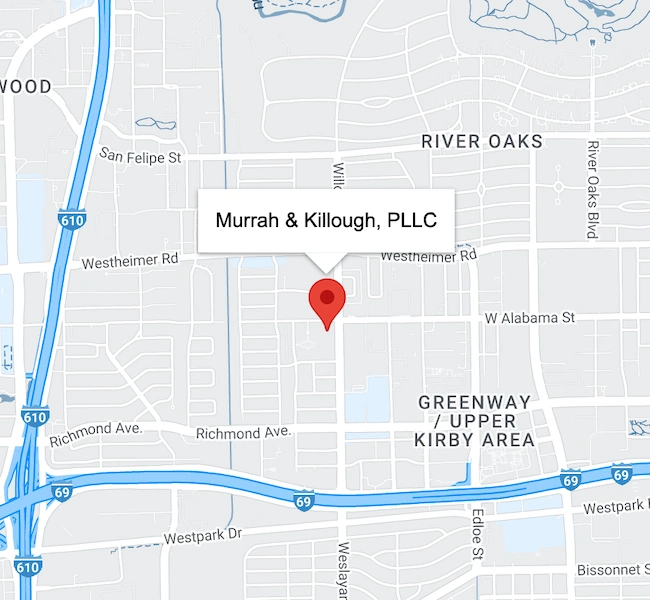
Houston Office
3000 Weslayan St.
Suite 305
Houston, Texas 77027
Phone
281-501-1601
Copyright © 2026 Murrah & Killough, PLLC. All rights reserved.
