

- About Us
- Business Law
- Civil & Commercial
- Family Law
- Resources
- Contact
What Happens If You Fail to Respond to Divorce Papers?
Not Responding to a Divorce Petition Can Still Result in a Divorce
 Failing to respond to divorce papers in Texas can result in a default judgment, meaning the court may finalize your divorce and divide your property and debts without your input. When you do not file an answer, the judge can still dissolve your marriage, and you will have no voice in the outcome.
What Silence Can Cost You
In Texas, an answer is due by 10:00 a.m. on the next Monday after 20 days have passed from the date papers were served. If you do not file an answer on time, the court may allow a default divorce. That means the case can keep moving, and the judge may sign orders on property and debt. If children are involved, conservatorship, child support, and possession proceedings can occur without your input.
In Texas, a spouse’s failure to file an answer does not mean the divorce petition is automatically granted. The filing spouse must still appear in court and present evidence to support the requested terms, including property division and any custody arrangements.
Several things can happen fast:
- Property division: The court may divide community property and debts based solely on the evidence presented by one side.
- Parenting orders: Conservatorship, visitation, and child support terms may be set without your proposed schedule or concerns.
- Final decree: Once the waiting period has passed, the divorce can be finalized, even if you never participated.
Under Texas Family Code § 6.702, Texas also requires a 60-day waiting period after the petition is filed before the divorce can be finalized, with narrow family violence exceptions. That waiting period is not extra time to ignore the case. It only limits how soon the divorce can be finished.
Get Ahead of a Default Before It Happens
Filing a timely answer can protect your voice in a divorce and avoid a default judgment. Take these steps right away:
- Read the citation carefully: The deadline is printed there, and missing it can change the whole case.
- File an answer promptly: Even a general denial can preserve your right to participate.
- Track local court requirements: In Harris County, cases involving a failure to respond to divorce papers often require documents such as a certificate of last known address, a military status affidavit, and sometimes an inventory.
What If You Were Never Properly Served with Divorce Papers?
Improper service can matter a great deal in Texas. If the papers were not served the way Texas law requires, the court may not have authority to enter a valid default judgment against you, and that issue can become a basis to challenge what happened later.
Can You Stop the Divorce by Refusing to Answer?
No. Texas is a no-fault divorce state, so one spouse can still obtain a divorce even if the other refuses to participate. Sometimes, you can file a motion to set aside a default judgment and request a new trial, which is due within 30 days after the judgment is signed under Texas Rule of Civil Procedure 329(b). Timing rules can change if notice was delayed. However, this motion does not prevent the divorce from moving forward.
Talk with Our Texas Divorce Lawyers at Murrah & Killough, PLLC
When a deadline is close or already passed, a Texas divorce attorney can help you decide whether to file an answer, seek more time, challenge service, or prepare for a hearing. A missed deadline does not always mean the case is over, but a delay makes every option harder.
At Murrah & Killough, PLLC, we handle family law and complex litigation, so we approach divorce cases with both personal and courtroom considerations in mind. We focus on protecting children, financial stability, and fair settlements, and we know what Houston-area family courts expect. That matters when a spouse is pushing for a default and asking the court to sign a final decree based on a one-sided record.
Schedule your confidential case review by using our online form or calling (281) 501-1601.




Contact Our Team Today!
Fields Marked With An “*” Are Required
"*" indicates required fields

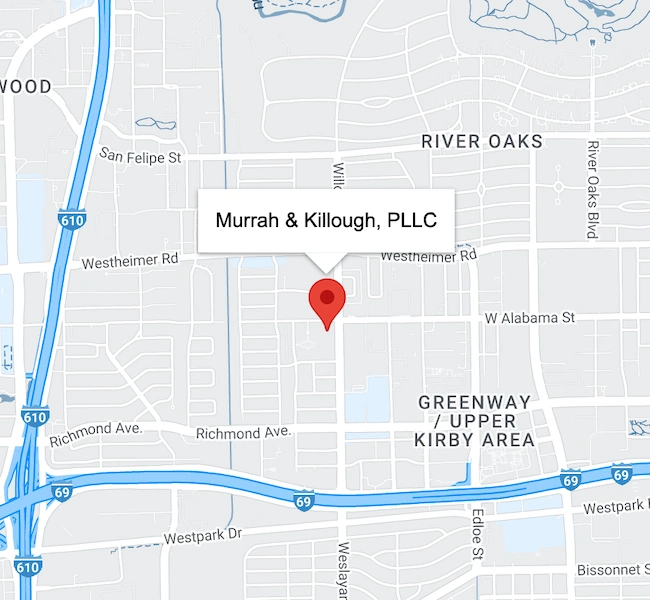
Houston Office
3000 Weslayan St.
Suite 305
Houston, Texas 77027
Phone
281-501-1601
Copyright © 2026 Murrah & Killough, PLLC. All rights reserved.
