

- About Us
- Business Law
- Civil & Commercial
- Family Law
- Resources
- Contact
Grandparents’ Rights Attorney in Houston
Fighting for Grandparent Visitation Rights
 Time with a grandchild can feel steady and natural for years, then suddenly disappear after a divorce, a death, a new partner, or a family conflict. In Texas, that loss does not automatically create a claim in court. State law starts with a strong presumption that a parent acts in a child’s best interest, so any case for grandparent access has to fit narrow legal rules and strong facts.
Our grandparents’ rights attorneys with Murrah & Killough, PLLC in Houston are ready to help you make that case. You can use our contact form or call (281) 501-1601 for a confidential case review.
Why Houston Families Choose Murrah & Killough, PLLC
Grandparent rights cases in Texas are fact-intensive and legally narrow. A court will not intervene simply because a family relationship has broken down. The law requires standing, evidence, and a clear connection between the denial of access and harm to the child. Families who come to us often arrive after being told there is nothing they can do. That is not always true, but finding out requires an honest evaluation of the facts.
At Murrah & Killough, PLLC, we handle family law matters from our Houston office with a focus on what the evidence actually supports and what local courts are likely to do with it. Before recommending a course of action, we look at whether standing exists, what proof is available, and whether access or conservatorship is the right request, given the circumstances. That upfront analysis protects families from spending time and resources on a strategy that cannot succeed.
When Texas Law Allows Grandparents to Ask for Court-Ordered Time
 Under Texas Family Code § 153.432, a biological or adoptive grandparent may seek possession of or access to a grandchild, but only in limited circumstances. The statute applies when at least one parent still has parental rights, and the request usually must connect to conditions such as a parent being incarcerated, found incompetent, deceased, or not having actual or court-ordered possession of the child. A grandparents’ rights attorney in Houston will consider that question first, because many families assume emotional closeness alone is enough, even though Texas law says otherwise.
What the Court Wants to See Before It Intervenes
Under Texas Family Code § 153.433, a grandparent must overcome the parental presumption and show that the denial of possession or access would significantly impair the child’s physical health or emotional well-being. That is a high bar, and proof matters more than feelings.
Common evidence may include:
- Medical concerns: Records, treatment history, or proof that a child’s care has become unstable.
- School problems: Attendance issues, behavior changes, or reports from teachers and counselors.
- Home conditions: Substance abuse, violence, neglect, or repeated disruptions in the child’s routine.
- Care history: Proof that the grandparent handled school pickup, meals, overnights, or daily supervision for a meaningful period.
When Conservatorship May Be Part of the Case
Some cases are bigger than visitation. Texas law creates two distinct pathways for grandparents who believe the situation calls for a custody arrangement rather than access alone.
The first is an original suit for managing conservatorship. Under Texas Family Code § 102.004(a), a grandparent may file an original suit requesting managing conservatorship if there is satisfactory proof that the child’s present circumstances would significantly impair the child’s physical health or emotional development. Importantly, a grandparent cannot file an original suit for possessory conservatorship, which is expressly prohibited under § 102.004(b). Managing conservatorship is the only conservatorship a grandparent can pursue through an original filing.
The second pathway is intervention. If a custody suit is already pending, filed by a parent or another authorized party, a grandparent may seek leave to intervene in that proceeding. The same standard applies, and there must be satisfactory proof that appointing a parent as sole or joint managing conservator would significantly impair the child’s physical health or emotional development.
What to Do Before Filing Anything
Early preparation can change the direction of the case. A family law lawyer can help determine whether the issue is a lack of standing or proof, or a need for a different type of request. Start here:
- Build a timeline: Dates of contact, caregiving, major family events, and when access stopped.
- Save communications: Texts, emails, school messages, and any statements about why contact was cut off.
- Gather third-party proof: Records from doctors, counselors, teachers, or caregivers when available.
- Stay measured: Angry messages and surprise confrontations can hurt more than help.
Frequently Asked Questions
Can Grandparents Get Visitation if Both Parents Say No?
Sometimes, but not without meeting the strict Texas standard. A court will not step in unless the case fits the statute and the evidence shows a serious risk to the child.
Does a Prior Caregiving History Matter?
Yes. A long record of daily care can help explain the child’s dependence on the relationship, though it still does not replace the need for legal standing and proof of harm.
Is There Help in Houston Outside of Court Hearings?
Yes. Harris County offers family court support services, and Texas also provides the Access and Visitation Hotline for legal information about possession and visitation issues.
Your Family Deserves a Clear Answer
Murrah & Killough, PLLC, handles family law matters from our Houston office, and we know that these disputes are rarely just legal disputes. They are family fractures with real consequences for children. When we evaluate a case, we focus on standing, proof, local court procedure, and whether the facts support access alone or something more.
Our goal is to give families a clear answer before they spend time and money on the wrong strategy. Find out more through a confidential case review. You can contact us online or call (281) 501-1601 to schedule yours.




Contact Our Team Today!
Fields Marked With An “*” Are Required
"*" indicates required fields

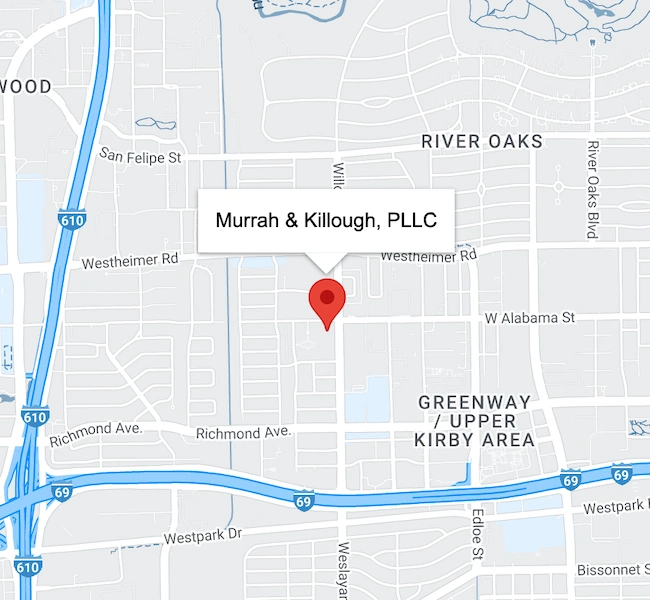
Houston Office
3000 Weslayan St.
Suite 305
Houston, Texas 77027
Phone
281-501-1601
Copyright © 2026 Murrah & Killough, PLLC. All rights reserved.
