

- About Us
- Business Law
- Civil & Commercial
- Family Law
- Resources
- Contact
Our Blog Post
How Texas LLC Owners Can Protect Against Veil-Piercing Claims

Limited liability companies are designed to separate business risk from personal assets. When an LLC operates as a true, independent business, Texas law generally treats company debts and disputes as obligations of the entity rather than the individual owners. This separation is often described as the liability shield, and it depends on how the company is formed, funded, and run day to day.
Veil-piercing claims arise when a creditor or opposing party argues that the LLC is only a formality and not a genuine, separate business. Protecting against those claims starts early and often turns on routine practices such as recordkeeping, financial separation, and decision-making authority. Consistent operations that respect the LLC’s legal boundaries can significantly reduce the risk that personal assets become a target in a business dispute.
Veil-Piercing Basics Under Texas Statutes
Texas law generally states that a member or manager is not liable for an LLC’s debts, obligations, or liabilities, including those set out in court judgments, unless the company agreement specifically changes that rule. A creditor can still sue the LLC and pursue its assets, but the starting point favors separation between the company and its owners.
Texas also pulls key “veil” rules from the corporate statute into the LLC context. One section explains that certain limits on owner liability apply to LLCs and treats “shares” as “membership interests” for that purpose. In plain terms, Texas does not ignore the LLC formation just because a business hits a rough patch or gets sued.
Contract-based claims have an additional protection that often gets overlooked. For obligations tied to a contract, Texas law strongly limits attempts to impose owner liability under theories like alter ego or “sham” unless the claimant can prove actual fraud for the owner’s direct personal benefit. A broad conclusion may require qualification.
Keep Money and Paperwork Separate
Separation starts with money. Commingling funds gives an opposing party a simple story: “Owner and company are the same.” A clean banking system makes it harder to tell that story. Company revenue should flow into company accounts, and personal spending should flow from personal accounts. Transfers between the two should have clear labels and written support.
Bookkeeping also plays a major role. Many LLCs do not fail because of one dramatic mistake, but because of repeated small shortcuts. Untracked owner draws, undocumented reimbursements, and random cash payments create gaps that a creditor can exploit. A business dispute often turns into a document dispute, and missing records rarely favor the LLC owner.
A practical separation checklist can help keep daily operations consistent:
- Use a dedicated business bank account and a dedicated business credit card for company spending.
- Pay owners through documented draws, distributions, or payroll, based on the tax plan used for the LLC.
- Keep invoices, receipts, and contracts in an organized system with consistent naming and dates.
- Record owner reimbursements with a short note explaining the business reason for the expense.
Use Agreements and Signatures the Right Way
The company agreement is more than paperwork. Clear language on management authority, distributions, and decision-making helps prove that the LLC followed its own internal rules. Major actions should leave a trail, even when Texas does not require the same formalities as corporations. Written consents, meeting notes, and approval emails can support the idea that the business operated with structure.
Signatures deserve equal attention. Contracts should be signed in the LLC’s name, with the signer listed by title, not as an individual agreeing to personal responsibility. A careful review can reveal issues that quietly create personal exposure, such as personal guaranties, security agreements, or clauses that blur who is obligated to pay.
Vendor setup documents also create risk. Credit applications, equipment leases, and construction agreements often include personal liability language in smaller print. A fast review before signing usually costs far less than fighting about intent later.
A Texas Business Law Attorney With Our Firm Can Help You Respond Early When a Claim Starts
Veil-piercing disputes often turn on how the business looks in real life, not just how it was formed on paper. Clear financial separation, consistent recordkeeping, and disciplined contract practices help show that an LLC is doing what it is meant to do: operate as its own Texas business entity and carry business risk without automatically exposing an owner’s personal assets. Small habits, repeated over time, often make the difference when credibility is questioned.
At Murrah & Killough, PLLC, we frame the story around real operations, not formalities. Clear financial separation, documented decisions, and contracts signed in the company’s name help reinforce that the business stands on its own.
Contact Murrah & Killough, PLLC for skilled business law litigation.
Contact the experienced lawyers at Murrah & Killough, PLLC today & schedule your free consultation. We proudly serve Houston, & all throughout Texas. Call (281) 501-1601 or visit our law offices at:
Our Houston Office
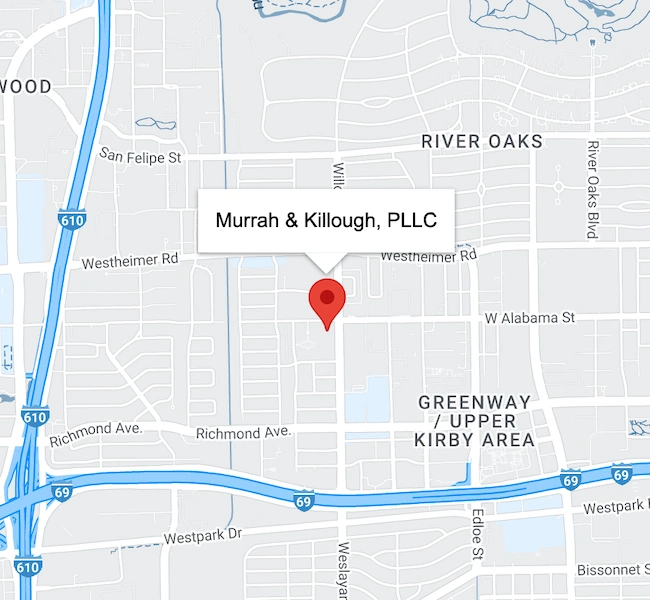
3000 Weslayan St. Suite 305
Houston, Texas 77027
Phone: (281) 501-1601
Contact Our Team Today!
Fields Marked With An “*” Are Required
"*" indicates required fields

Houston Office
3000 Weslayan St.
Suite 305
Houston, Texas 77027
Phone
281-501-1601
Copyright © 2026 Murrah & Killough, PLLC. All rights reserved.
