

- About Us
- Business Law
- Civil & Commercial
- Family Law
- Resources
- Contact
Houston Breach of Fiduciary Duty Attorney

When it comes to running a business, maintaining trust and accountability is essential. Every officer, director, or partner owes fiduciary duties to the company, including loyalty, care, good faith, and oversight. When these obligations are ignored or violated, your business can suffer serious financial losses, missed opportunities, and operational disruptions. Understanding fiduciary duties, recognizing common breaches, and knowing the types of recoverable compensation are critical steps in protecting your company and preserving its long-term success.
At Murrah & Killough, PLLC, our experienced attorneys help Houston businesses navigate breach of fiduciary duty claims. We work closely with you to evaluate your situation, document losses, and develop strategic legal plans designed to protect your interests and recover compensation. Whether your case involves financial mismanagement, conflicts of interest, or other breaches, our team provides clear guidance, thorough representation, and aggressive advocacy to ensure your business is positioned for the best possible outcome.
With the right legal support, you can address fiduciary breaches effectively and safeguard your company’s future. For a legal consultation with our knowledgeable Houston breach of fiduciary duty attorneys, please call us at (281) 501-1601 or contact us online today.
What are the Most Important Fiduciary Duties in Business?
 When you run or are involved in a business, understanding fiduciary duties isn’t just a legal formality, it’s essential for protecting your company and ensuring long-term success. As someone responsible for managing a business, you owe certain obligations to the company and its stakeholders, and these obligations are called fiduciary duties. While they may sound technical, at their core, they are about trust, loyalty, and responsible management.
- The first duty you should be aware of is the duty of loyalty. This requires that you always put the interests of the business above your personal interests. Every decision you make should be guided by what benefits the company, not what benefits you individually. Conflicts of interest can arise easily, and maintaining loyalty ensures that your choices are always aligned with the company’s best interests.
- Next is the duty of care. This means you must make informed, thoughtful decisions for the business. It’s not enough to act; you must act with the diligence, competence, and attention that a reasonable person would exercise in similar circumstances. This includes staying informed about the company’s operations, financial health, and industry trends so your decisions are grounded in knowledge rather than guesswork.
- Closely related is the duty of good faith. This duty emphasizes honesty and fairness in your dealings with the company, your partners, and stakeholders. Acting in good faith means avoiding deceit, misrepresentation, or any conduct that could harm the business, even unintentionally.
- Finally, there’s the duty of oversight. If you are in a managerial or board role, you are responsible for monitoring the company’s operations, compliance, and internal controls. This ensures the business is operating legally, ethically, and efficiently, and it prevents problems from escalating unnoticed.
Together, these fiduciary duties create a framework of accountability that protects both the business and its leadership.
Most Common Breaches of Fiduciary Duties in Houston
When you run a business, understanding fiduciary duties is only the first step. Equally important is knowing how these duties can be breached and the impact such violations can have on your company. A breach occurs when someone in a position of trust, like a director, officer, or partner, fails to act in the best interest of the business. Recognizing the common ways this happens can help you protect your company before serious harm occurs.
One of the most frequent breaches is self-dealing. This happens when a person in a position of trust uses their role to benefit themselves personally rather than the company. For example, they might divert business opportunities, sign contracts that favor a personal interest, or take profits that belong to the company. Self-dealing can drain resources, create internal conflict, and damage morale among other stakeholders.
Another common violation is the misuse of confidential information. When someone shares or exploits sensitive company information for personal gain, it can result in lost opportunities, reputational damage, or weakened competitive positioning. In Houston’s competitive business environment, even a single leak of strategic information can have lasting consequences.
Failing to act with the proper level of care, or negligence, is another breach to watch for. This includes making uninformed decisions, ignoring important financial reports, or failing to monitor business operations. Even if unintentional, negligence can lead to poor investments, missed deadlines, or operational failures that could have been avoided.
Conflicts of interest are also a major source of breaches. When a business leader places personal relationships or outside business interests above the company’s priorities, it can lead to biased decisions that hurt growth, revenue, or company culture.
The effects of these breaches are significant. Your business could face financial losses, reduced trust from investors, and weakened employee confidence. Partnerships may fracture, and long-term strategic goals can be jeopardized. Beyond immediate losses, breaches of fiduciary duty create uncertainty, distract leadership from core operations, and can slow the company’s growth for months or even years.
Recoverable Compensation in a Business Claim or Lawsuit for Breach of Fiduciary Duty
If your business has been harmed by a breach of fiduciary duty, understanding the types of compensation you may be able to recover is essential. When someone in a position of trust, like a director, officer, or partner, fails to act in the best interest of your company, the law allows you to pursue remedies that can help restore your business to the position it would have been in if the breach had not occurred.
- Financial Losses: This includes money your business directly lost because of the fiduciary’s improper actions. For example, if a business opportunity was diverted for personal gain or a decision made by a fiduciary caused the company to lose revenue, you may be able to recover those amounts. These losses are focused on real, measurable harm that can be clearly tied to the breach.
- Lost Profits: If the breach caused your business to miss out on potential income, you may be entitled to compensation for those lost earnings. This can include profits that were reasonably expected but never realized because of the fiduciary’s actions. Recovering lost profits can help make up for opportunities your business should have been able to take advantage of under normal circumstances.
- Lost Value in Assets or Investments: If a fiduciary mismanaged company assets, sold property improperly, or made poor financial decisions that reduced the value of your business, you can pursue compensation for the decrease in value. This ensures that your company is put back in the position it would have been in if the fiduciary had fulfilled their duties.
- Interest and Consequential Damages: Interest can apply to delayed payments or lost funds, and consequential damages cover additional harm caused indirectly by the breach, such as costs from operational disruptions, legal expenses, or reputational harm.
Understanding recoverable compensation is not just about numbers. It’s about protecting your business and holding those responsible accountable. By seeking the full range of damages, you can restore financial stability, support ongoing operations, and reinforce the importance of fiduciary responsibility within your company.
Why Select Us to Handle Your Houston Breach of Fiduciary Duty Matter?
When your business faces a breach of fiduciary duty issue in Houston, choosing the right legal team can make all the difference. At Murrah & Killough, PLLC, we combine skill, integrity, and extensive experience to provide comprehensive legal support for companies navigating complex business disputes.
Our attorneys bring more than 80 years of combined legal experience to the table. This background allows us to approach your case with the perspective of someone who understands the daily challenges and strategic decisions that businesses face. By leveraging this insight, we help align your legal strategies with your company’s growth goals and long-term plans.
Beyond litigation, we provide value-based transactional guidance and business planning services that equip your company with informed legal advice, giving you a competitive advantage. Our team represents clients across a spectrum of industries, service industries, healthcare practices, and manufacturing, ensuring we can handle the unique challenges your business faces.
Whether your business requires proactive planning or aggressive representation in fiduciary duty disputes, our goal is always the same: to strengthen your company and protect its interests. With Murrah & Killough, PLLC, you gain experienced counsel dedicated to safeguarding your business while supporting its continued success.
How Our Lawyers Can Handle Your Breach of Fiduciary Duty Case
Experienced Guidance from Start to Finish
At Murrah & Killough, PLLC, we understand how complex and stressful a breach of fiduciary duty case can be for a business. Our experienced lawyers are here to guide you every step of the way. From the initial assessment of your situation to the final resolution, we focus on protecting your company’s interests and helping you recover the compensation you deserve. We work closely with clients in Houston to develop practical, strategic approaches tailored to each case.
Thorough Case Evaluation
The first step in handling your breach of fiduciary duty case is a thorough evaluation of the facts. Our attorneys review contracts, financial records, and communications to determine whether a fiduciary acted against your company’s best interests. By carefully analyzing the situation, we identify potential damages, document losses, and uncover evidence that strengthens your claim. This detailed approach ensures that your case is built on a solid foundation.
Strategic Legal Planning
Once we understand your case, we develop a strategic plan designed to achieve the best possible outcome. Our lawyers advise you on the most effective legal actions to take, whether that involves negotiation, mediation, or litigation. We also help you assess the potential benefits and risks of different strategies, so you can make informed decisions at every stage of the process.
Aggressive Representation in Houston Courts
If your case proceeds to court, our team is prepared to advocate aggressively on your behalf. We understand Houston’s business environment and the unique challenges that local companies face in fiduciary duty disputes. Our lawyers are skilled at presenting evidence, questioning witnesses, and making persuasive arguments to ensure your company’s interests are fully represented.
Protecting Your Business Interests
Throughout the process, our focus is on protecting your business, minimizing financial losses, and restoring stability. We prioritize communication and keep you informed at every step, so you always know where your case stands. With Murrah & Killough, PLLC on your side, you can have confidence that your breach of fiduciary duty case in Houston is being handled by lawyers with experience, dedication, and a clear understanding of what your business needs to succeed.
Consult Our Experienced Houston Breach of Fiduciary Duty Attorneys Right Away
At Murrah & Killough, PLLC, we will fight hard for your business’s interests and zealously pursue the most favorable result in your case. For a legal consultation, call us at (281) 501-1601 or contact us online today.




Contact Our Team Today!
Fields Marked With An “*” Are Required
"*" indicates required fields

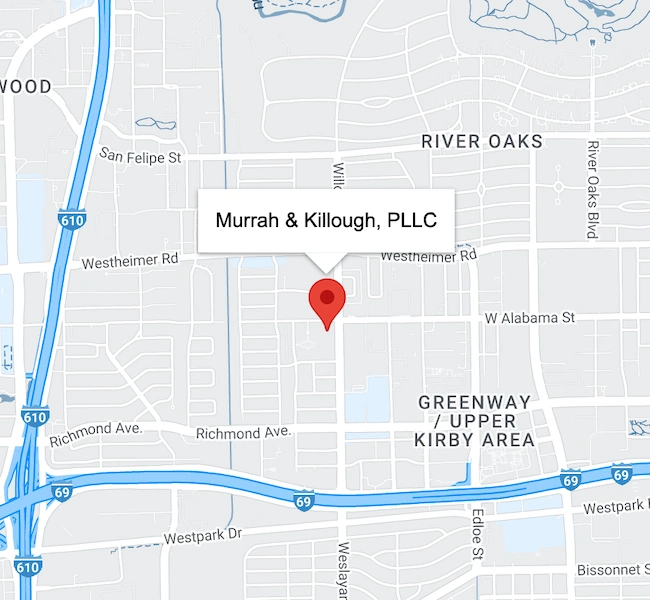
Houston Office
3000 Weslayan St.
Suite 305
Houston, Texas 77027
Phone
281-501-1601
Copyright © 2026 Murrah & Killough, PLLC. All rights reserved.
