

- About Us
- Business Law
- Civil & Commercial
- Family Law
- Resources
- Contact
Houston Breach of Contract Attorneys
Helping Houston Businesses and Individuals Resolve Contract Disputes
 Contracts shape everyday life in Houston, from home repairs and medical practices to vendor deals and partnership buyouts. Problems begin when one side does not do what the agreement requires, or does it late, or does it in a way that defeats the point of the deal. In those moments, Houston breach of contract attorneys can help you sort out what the contract actually says, what Texas law allows, and what a fair path forward looks like before time and costs grow.
At Murrah & Killough, PLLC, our contract attorneys approach contract disputes with clear goals: identify the broken promise, measure the real business impact, and push for a resolution that protects what you built. In the first meeting, a lawyer with our firm will focus on the paper trail, timeline, and contract language that control notice, payment, and performance. Those details usually decide what leverage exists and what options remain. If you have questions about a potential contract dispute, contact us online or call (281) 501-1601 to schedule a time to come in.
What Counts as a Contract in Texas?
 Texas does not require complex wording for an agreement to be a contract, but certain basic elements must be present. An offer has to be made, the other side has to accept it, and the agreement has to include key terms that are clear and can be applied. Payment terms, delivery terms, scope of work, and who does what are common examples. Written contracts usually provide the clearest proof, yet some agreements can still be enforced when they are oral, partly written, or evidenced by conduct.
When Texas Usually Requires a Written Agreement
Certain deals commonly require a written contract to be enforceable. Common examples include many real estate agreements and some promises tied to another person’s debt. Problems often arise when the parties treat a handshake deal as a signed contract, only to discover later that the law requires something in writing. Clear records can still help in those disputes, because emails and invoices sometimes show the terms both sides followed, even when the original agreement was informal.
Capacity and authority are also important. A contract can fail when the person who signed lacked authority to bind the company, or when the business entity listed in the contract does not match the one that actually performed the work. We will focus on who signed, who paid, and which company name appears on the documents, because those details can decide who can sue and who can be sued.
Confusion often arises from emails, invoices, change orders, and text messages that accumulate over time. One message might seem harmless at the moment, yet it can change a deadline, a price, or whether the assigned project was actually “done.” Before a dispute becomes a lawsuit, a careful review can help assess whether the contract was formed, whether it was later changed, and whether conduct affected the enforcement of certain terms.
How a Breach of Contract Dispute Usually Starts
Most disputes begin with a missed deadline, an unpaid invoice, rejected work, or a sudden refusal to perform. The first step is often internal: someone pulls the contract, searches for addenda, and tries to match what happened to what the document requires. Many contracts also include notice provisions, cure periods, and requirements for where and how to send formal notices, so the process can begin long before a petition is filed.
Early Notice and Business Reality
Deadlines in the contract can control the next move. Terms may require written notice, delivery to a specific address, or a set time period to allow a fix. Missing those steps can reduce leverage even when the breach feels obvious. Planning early also helps avoid “moving target” claims, in which the other side argues the complaint changed from week to week.
When tensions rise, the tone of communication usually shifts, which can affect the case. In a demand letter stage, a lawyer will often help frame the problem in a way that is accurate, firm, and tied to contract language. The reason is that inflated claims and vague accusations can weaken credibility. At Murrah & Killough, PLLC, our Houston breach of contract attorneys can also help set a negotiation plan that aims for payment, performance, a structured exit, or a clean separation, depending on what the contract and the business reality allow.
Settlement talks also work better when both sides understand the real costs of delay. Lost time, staff disruption, and stalled projects can turn a solvable breach into a long fight. We focus on practical solutions that protect cash flow and reduce disruption while the legal process moves forward.
What Must Be Proven to Win a Contract Claim?
Texas breach of contract cases often turn on specific legal elements and documented facts. A strong claim usually shows a valid contract, performance by the complaining party, or a lawful excuse for nonperformance, a breach by the other side, and damages caused by that breach. Evidence is not limited to the signed agreement. It can also include project records and business systems that show what was requested and what was delivered.
Evidence That Connects the Breach to Real Loss
Proof must connect the broken promise to a clear dollar impact. Damage claims tend to hold up better when supported by invoices, replacement bids, repair records, and internal reports that show how the breach changed costs or revenue. Clean timelines also help, because a judge may question damages that appear months before the alleged breach or long after the work ended.
To keep the case organized, the proof often falls into a few practical categories:
- The contract and any addenda, change orders, or written modifications.
- Communications showing notice, approval, rejection, or promised fixes.
- Business records showing payments, invoices, delivery logs, and schedules.
- Proof of loss, such as repair costs, replacement costs, or lost revenue tied to the breach.
In case strategy, we will also watch for contract clauses that limit damages, require mediation, set attorney fee rules, or define what counts as default. Strong planning at the start can prevent wasted discovery and keep the case focused on the terms that actually control the outcome.
Deadlines and Common Defenses Under Texas Law
Timing can decide whether a valid claim can be heard at all. Many breach of contract claims in Texas have a limitations period that can run quickly once a breach occurs, and certain contracts can shorten deadlines by agreement in specific settings. Planning has to start with the date of breach, the date you learned of it, and any contract provisions that affect accrual, notice, or a chance to cure.
Defenses also deserve early attention because they shape settlement value and trial risk. Our Houston breach of contract lawyers can pressure-test those defenses early, then build around them with documents and testimony that fit the real business timeline. Here are just a few of the defenses parties typically use in breach of contract cases:
- No contract existed, often because key terms were missing or acceptance was unclear.
- The complaining party breached first, which can limit or block recovery.
- Other defenses focus on waiver, ambiguity, impossibility, or a lack of damages actually caused by the breach.
Remedies Texas Courts May Award in Contract Cases
A contract claim is not only about proving a wrong; it is about proving the remedy that fits the deal. Damages often aim to place the injured party in the position it would have been in if the contract had been performed as promised. In many cases, that means unpaid amounts, repair or replacement costs, or other measurable losses tied to the breach. Some contracts also address liquidated damages, interest, or fee shifting, and those clauses can change the settlement range.
Non-money remedies can also play a role. Some disputes call for an order requiring performance, especially when the contract involves something unique and money alone does not solve the problem. In those cases, an attorney will evaluate whether specific performance is realistic, whether the contract language supports it, and whether the court is likely to enforce it. A focused remedy plan keeps the case from becoming an open-ended fight, and it also helps settlement talks stay grounded in what a Texas court can actually award.
How Murrah & Killough, PLLC, Houston Breach of Contract Attorneys Typically Approach Disputes
Good contract litigation begins with disciplined intake and early organization. Murrah & Killough, PLLC, builds cases around the contract language, the timeline, and clear proof of damages. We will help you gather the right records, identify missing documents, and avoid making casual statements that can be used out of context later. Strategic pre-suit work can also include negotiation plans that seek a business solution without giving up legal leverage.
Murrah & Killough, PLLC, breach of contract attorneys will offer steady communication and clear next steps. A lawyer from our team will keep the process practical, direct, and aligned with your business goals from start to finish. Schedule your confidential consultation by contacting us online or calling (281) 501-1601 and learn more about how we can help.
Contact Murrah & Killough, PLLC for skilled business law litigation.
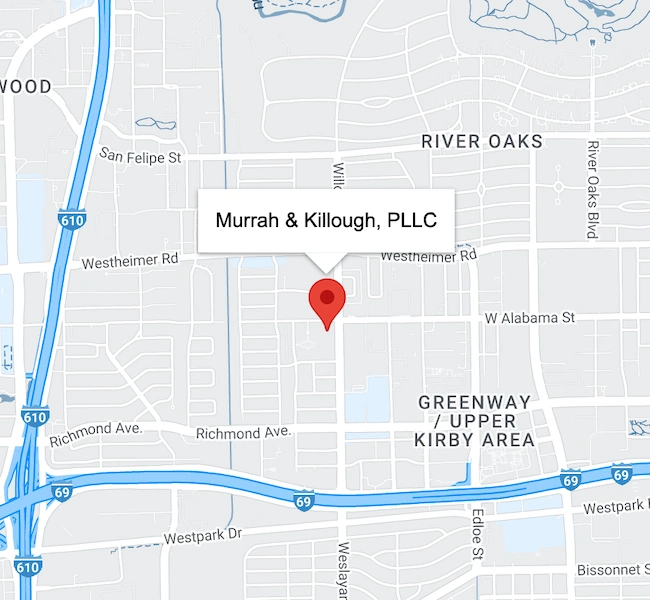
Contact the experienced lawyers at Murrah & Killough, PLLC today & schedule your free consultation. We proudly serve Houston, & all throughout Texas. Visit our law offices at:
Our Houston Office
3000 Weslayan St. Suite 305
Houston, Texas 77027
Phone: (281) 501-1601




Contact Our Team Today!
Fields Marked With An “*” Are Required
"*" indicates required fields

Houston Office
3000 Weslayan St.
Suite 305
Houston, Texas 77027
Phone
281-501-1601
Copyright © 2026 Murrah & Killough, PLLC. All rights reserved.
