

- About Us
- Business Law
- Civil & Commercial
- Family Law
- Resources
- Contact
How to Handle a Partnership Dispute in Houston
What Should You Do When a Partnership Dispute Begins?
 A partnership dispute rarely starts with one big blow-up. It usually begins with small issues that accumulate: payments that no longer make sense, decisions made without you, or a partner acting as if the business belongs to them alone.
If you are dealing with that in Houston, you are not overreacting. These disputes can spread quickly because the business still has customers, payroll, leases, and deadlines, even as trust breaks down.
Texas law provides tools to protect you, but the first steps matter. A clean plan can reduce heat, protect money and records, and set you up for a solution you can live with. When help is needed, a lawyer can help you keep the process focused on facts rather than personal attacks.
What is the Role of the Partnership Agreement?
The partnership agreement is usually the center of the partnership dispute. Texas law permits many rules to be set by agreement, so the document often addresses voting, distributions, removal, exits, and dispute procedures.
If you do not have a written agreement, do not assume you have no rights. Texas still recognizes partnerships based on how people act and share profits, but proving the terms becomes more difficult and more expensive.
What If You Never Signed a Written Partnership Agreement?
A partnership can still exist based on conduct, profit sharing, and how the business was held out to others. The hard part is proving the terms, so emails, payment records, and customer contracts become more important.
What Records Should You Gather?
Before emotions take over, gather and preserve the records that reflect what is actually happening. Do so lawfully by limiting yourself to documents and systems you are already authorized to access, and avoid attempting to access accounts or information without permission.
- Monetary Records: These include bank statements, accounting exports, payment apps, deposit logs, and expense backups.
- Decision Records: Records that can show decisions your partner made include emails, texts, meeting notes, signed consents, vendor contracts, and customer agreements.
If something feels off, write a timeline while it is fresh. Include dates, amounts, and who approved what. A simple timeline often exposes the real issue, like unauthorized spending or decisions made without required consent.
What are Common Texas Partnership Duties?
Texas partnership law sets baseline duties that are critical to most disputes. The general standards of partner conduct, including duties of loyalty and care, can shape what constitutes fair dealing in the business relationship.
Common flashpoints usually fit into one of two categories:
- Taking Value From the Business: Diverting customers, using partnership property for personal gain, or running side deals that should belong to the partnership.
- Blocking Access and Information: Cutting off account access, refusing basic financial reports, or changing vendors and signers without agreement.
Texas also allows partners to seek relief to enforce rights under the agreement and the partnership statutes, and an accounting may be part of that request.
How Can You Resolve a Partnership Dispute?
Partnership disputes can often be resolved through structured approaches that preserve business relationships while addressing underlying conflicts. Common resolution methods include:
- Direct Negotiation Between Partners: Many disagreements can be resolved through honest conversation about concerns, expectations, and proposed solutions.
- Mediation: A neutral third-party mediator facilitates discussion and helps partners identify common ground and potential compromises. Mediation is confidential, less expensive than litigation, and allows partners to maintain control over the outcome.
- Arbitration: Unlike mediation, arbitration results in a binding decision made by a neutral arbitrator who hears evidence and arguments from both sides. Many partnership agreements include arbitration clauses requiring this process before litigation. Arbitration is generally faster and less costly than court proceedings while providing a definitive resolution.
What if You Cannot Reach a Resolution?
When negotiation, mediation, and arbitration fail to resolve partnership disputes, litigation may become necessary. Partnership dissolution lawsuits allow courts to intervene when partners cannot agree on fundamental business issues.
Texas law permits judicial dissolution when partnerships become impractical, when partners engage in conduct that makes continuing the partnership unreasonable, or when partners fundamentally disagree on business management.
Dissolution litigation addresses critical issues, including asset valuation and distribution, liability allocation, breach of fiduciary duty claims, and buy-out terms for departing partners.
Courts can appoint receivers to manage business operations during disputes, order accounting of partnership assets and liabilities, and enforce partnership agreement terms.
Our Partnership Lawyers are Ready to Help
If you wait too long, the dispute can reshape the business in ways that are hard to undo, including lost customers, missing records, damaged vendor relationships, and new debt you did not approve.
Early action helps preserve leverage, protect financial records, and clarify your legal options before positions harden.
If you are ready to take control of the situation, call (281) 501-1601 or use our online form to set a case evaluation with a Murrah & Killough, PLLC lawyer.
We will outline your rights, identify immediate risk areas, and build a practical plan for your Houston partnership dispute.




Contact Our Team Today!
Fields Marked With An “*” Are Required
"*" indicates required fields

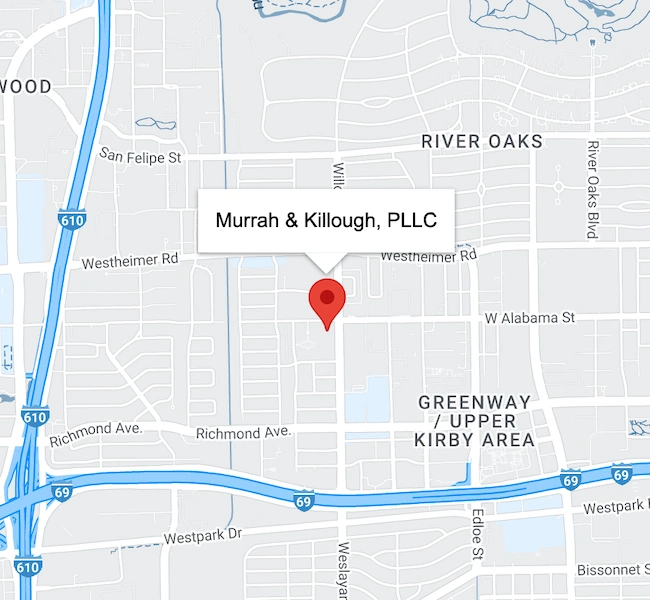
Houston Office
3000 Weslayan St.
Suite 305
Houston, Texas 77027
Phone
281-501-1601
Copyright © 2026 Murrah & Killough, PLLC. All rights reserved.
