

- About Us
- Business Law
- Civil & Commercial
- Family Law
- Resources
- Contact
Fort Bend Divorce Lawyer
Compassionate Fort Bend Divorce Attorney Dedicated to Easing the Process
 Are you going through a divorce in Fort Bend County? Hiring a Fort Bend divorce lawyer guides you and gives you the support you need. At Murrah & Killough, PLLC, we understand the challenges and emotions involved in the divorce process. Our experienced Fort Bend divorce lawyer is committed to helping you at every step, making sure your rights are protected and your needs come first. Whether it’s handling child custody, dividing assets, or ensuring fair spousal support, we are here to provide the legal help you need with all family law matters.
Let us help you take control of your future and find peace of mind during this transition. Contact Murrah & Killough, PLLC today at 281-501-1601 for a personalized consultation. Our caring and skilled divorce attorneys are ready to support you and fight for your needs.
Comprehensive Divorce Services in Fort Bend County
Divorce can be emotionally difficult and painful, but the right support can make it easier. Murrah & Killough, PLLC focuses on putting our clients’ needs first, making the process as smooth as possible. Our skilled divorce attorneys work hard to make the divorce process easier, secure good settlements, and provide ongoing legal advice. Murrah & Killough, PLLC, known for its caring approach, ensures clients get both moral and legal support during these tough times.
Understanding the Divorce Process
The divorce process in Texas can often take several months or even more than a year for contested cases. There is a required waiting period of 60 days for a divorce to be finalized in the state. Factors like contested cases and back-and-forth talks can further lengthen the divorce process.
A divorce attorney helps prevent you from being taken advantage of due to lack of experience. We also help with filing divorce papers, representing your interests, and preparing you for life after divorce. When filing for divorce, discuss with your attorney whether to specify reasons or choose irreconcilable differences. Avoid rushing the process; take time to make informed decisions. A divorce can be completed peacefully without aggression or hostility.
The process depends on each case, but in general, you can expect something like this:
- Initial Consultation with a Divorce Attorney: Begin by meeting with a qualified divorce lawyer to discuss your case, understand your rights, and outline your goals.
- Filing Divorce Papers: Your attorney will help you file the necessary divorce papers in Fort Bend County, initiating the legal process.
- Serving Divorce Papers: The filed papers must be served to your spouse, officially notifying them of the divorce proceedings.
- Response from Spouse: Your spouse will have a set period to respond to the divorce petition, either agreeing or contesting the terms.
- Discovery Process: Both parties exchange information and documents related to assets, debts, income, and child custody arrangements.
- Negotiation and Mediation: Attempt to reach an agreement on key issues such as property division, child custody, and support through negotiation or mediation.
- Temporary Orders Hearing: If necessary, request temporary orders from the court to address immediate concerns like child custody or spousal support.
- Finalizing Settlement Agreement: Once both parties agree on the terms, the settlement agreement is drafted and signed.
- Court Approval and Final Hearing: Present the settlement to the court for approval. If contested, a final hearing will be scheduled where a judge makes the final decisions.
- Issuance of Divorce Decree: Upon court approval, the divorce decree is issued, legally finalizing the divorce and outlining the terms agreed upon or decided by the judge.
How Long Does the Divorce Process Take in Fort Bend County?
The timeline for a divorce in Fort Bend County, as in the rest of Texas, can vary significantly depending on several factors. Initially, Texas law mandates a 60-day waiting period from the date the divorce petition is filed before a divorce can be finalized.
For an uncontested divorce, where both parties agree on all terms such as child custody, property division, and spousal support, the process can be relatively swift, often concluding shortly after the waiting period.
A contested divorce, where disagreements exist on key issues, can take much longer, often extending several months to over a year. Factors that can delay the process include extensive negotiations, discovery requirements, and court availability. Additionally, if mediation or court intervention is necessary to resolve disputes, this can further lengthen the process.
Additional Considerations in the Divorce Process
 Divorce isn’t just about ending a marriage; it involves several complex issues that need careful handling to ensure fairness for both parties. Beyond the emotional challenges, there are key aspects that must be addressed, such as child custody arrangements, child support calculations, division of marital assets, and establishing spousal support.
Mediation and Alternative Dispute Resolution
Mediation is a preferred alternative to litigation for resolving conflicts in divorce cases. A neutral mediator helps discussions between parties to reach an agreement. This cooperative method helps couples resolve disputes without going to court.
Mediation often leads to quicker resolutions, reducing time and legal costs compared to litigation. Mediation ensures privacy, keeping sensitive information confidential, unlike public court hearings.
The Mediation Process
The mediation process offers a more relaxed and informal setting compared to court proceedings, allowing both parties to engage in open discussions with the assistance of a neutral mediator. This process focuses on fostering communication and exploring various options to resolve disputes amicably.
The mediator acts as a facilitator, guiding the conversation without providing legal advice, ensuring that the environment remains unbiased and conducive to reaching a mutually agreeable resolution. This cooperative approach empowers both parties to have a say in the outcome, often leading to more satisfactory and lasting agreements.
Can I Request Temporary Orders During My Divorce?
Yes, you can request temporary orders during your divorce in Texas, which serve to establish interim arrangements until the final divorce decree is issued.
Purpose of Temporary Orders
Temporary orders aim to address urgent issues that arise while the divorce is ongoing. They can:
- Establish Temporary Child Custody and Support: Determine where the children will live, visitation schedules, and the amount of child support to be paid, ensuring the children’s needs are met promptly.
- Provide Spousal Support: Offer financial assistance to a spouse who may need support during the divorce proceedings, helping maintain their standard of living.
- Regulate Property Use: Decide who will have access to or use certain marital properties, like the family home or vehicles, during the divorce.
Prenuptial and Postnuptial Agreements
 Prenuptial and postnuptial agreements protect assets and financial stability in marriage. The purpose of a prenuptial agreement is to protect property before marriage. Prenuptial agreements facilitate open discussions about financial expectations and responsibilities before marriage.To create a valid prenuptial agreement, both parties should be advised by separate attorneys.
Postnuptial agreements, also known as marital property agreements in Texas, are established to outline the division of assets during marriage and can be amended to reflect changes in the couple’s financial circumstances.
The Impact of Prenuptial and Postnuptial Agreements on Divorce Proceedings
Incorporating a prenuptial or postnuptial agreement into your divorce proceedings can lead to a more amicable resolution, as both parties have agreed upon terms before or during the marriage. These agreements can address various aspects, such as property division, and spousal support ensuring that both parties’ interests are protected. By clearly defining what is considered separate and community property, prenups and postnups help streamline the property division process, potentially saving time and legal expenses.
Property Division: Fair Distribution of Assets
For property division, Texas follows community property laws, which means that the parties have equal interests in the assets acquired during the marriage. Marital property includes everything obtained during the marriage, while separate property includes what was owned before the marriage.
Identifying Community and Separate Property
Separate property includes gifts, inheritances, or personal injury settlements received by one spouse during the marriage, as well as property owned before marriage. Community property includes everything acquired by either spouse during the marriage unless established as separate.
Examples of Community Property:
- Income earned by either spouse during the marriage
- Real estate purchased with marital funds
- Retirement accounts accumulated during the marriage
- Vehicles bought during the marriage
- Business profits earned during the marriage
- Bank accounts and savings acquired during the marriage
Examples of Separate Property:
- Inheritances received by one spouse during the marriage
- Gifts given to one spouse
- Personal injury settlements awarded to one spouse
- Property owned by either spouse before the marriage
- Assets purchased with separate funds
- Certain income from separate property, if kept separate
Valuing and Dividing Assets
Dividing marital assets requires following Texas community property laws to ensure fair distribution. Fair asset division involves assessing the value and type of assets, including real estate, investments, and retirement accounts. This process ensures both parties receive a fair share of marital assets.
Handling Complex Property Issues
Complex property division can involve challenges such as business ownership and dividing high-value assets requiring thorough analysis and care. Business ownership can present unique challenges, as it requires determining the business’s value and the extent to which it is considered community property.
High-value assets, such as properties, investment portfolios, and retirement accounts, also require careful evaluation to ensure equitable distribution. Additionally, hidden assets or undisclosed financial resources can complicate the division process, employ forensic accountants or financial experts to uncover all relevant information.
Spousal Maintenance: Securing Fair Support
Spousal maintenance is important for ensuring fair support after divorce. Eligibility for spousal support in Texas is determined by factors such as a marriage duration of at least 10 years. The recipient must show they cannot meet their minimum reasonable needs after divorce to qualify for support.
Caregivers for children with disabilities requiring significant attention may also be eligible for spousal maintenance. Fair support requires evaluating the unique circumstances of each case to determine eligibility.
Determining Maintenance Amounts
Factors such as marriage duration and the recipient’s disability can influence spousal support eligibility. Courts consider various factors, including both spouses’ abilities to meet their minimum reasonable needs, when determining maintenance amounts.
The Texas Family Code caps monthly spousal support at either $5,000 or 20% of the paying spouse’s gross income. Texas judges have significant discretion to consider factors like each spouse’s income potential and the length of the marriage when they decide to pay spousal support and address complex property issues. However, the final amount can vary significantly based on the unique circumstances of each case.
Modifying Spousal Maintenance
Spousal maintenance can be adjusted if the recipient remarries or significantly improves their income. Court modifications to maintenance orders often reflect changes in the recipient’s financial situation or personal circumstances, especially when one party may need to pay spousal maintenance.
Changes in the paying spouse’s financial circumstances can also prompt a reevaluation of spousal maintenance. For instance, if the paying spouse experiences a substantial decrease in income due to job loss or health issues, they may petition the court for a reduction in their maintenance obligations. If the paying spouse’s income significantly increases, the recipient may seek an increase in support payments to better align with the current financial landscape.
Modifications to spousal maintenance can be influenced by changes in the cost of living or inflation rates, ensuring that the support provided remains adequate to meet the recipient’s needs.
Child Custody: Protecting Your Parental Rights
Child custody is often one of the most disputed issues in divorces. Family courts’ primary focus is on the child’s well-being. Reasons like physical or emotional abuse can affect custody arrangements. Custody agreements often change as children grow and their needs and circumstances change. If a parent is not awarded custody during the divorce can ask for a change in custody arrangement later on.
Establishing Custody Agreements
Establishing custody agreements is an important step in protecting parental rights. Courts consider several factors in child custody cases, such as the emotional and mental health of parents, living situations, and safe environments. When parents divorce, they are typically presumed to be joint managing conservators, sharing responsibilities.
Modifying Custody Orders
Child custody arrangements can be changed after the initial decision if circumstances change. Custody orders can be modified if significant changes in circumstances affect the child’s welfare. Changes can include:
- A parent relocating to a different city or state impacts the child’s living arrangements and visitation schedule.
- Changes in a parent’s employment status, such as a new job with different hours, affect their ability to care for the child.
- The child’s needs evolve due to age or health, requiring adjustments to the custody arrangement.
- Evidence of neglect or abuse by one parent, necessitating a change to protect the child’s well-being.
- One parent remarrying or introducing a new partner could significantly impact the child’s living environment.
- Significant improvements or declines in a parent’s mental or physical health, altering their ability to fulfill parental responsibilities.
- Changes in the child’s educational or extracurricular needs, require a different custodial arrangement to accommodate these activities.
- A parent’s failure to comply with the existing custody order prompts a modification to ensure the child’s best interests are met.
Keeping custody agreements relevant and beneficial for the child is an ongoing process.
Visitation Rights
Visitation rights are granted to ensure that a parent maintains a meaningful relationship with their child, supporting the child’s emotional and psychological well-being. Typically, visitation schedules are designed to accommodate the child’s routine, promoting consistency and minimizing disruption in their daily life.
In many cases, visitation rights are established through “possession and access”, in which a detailed parenting plan outlines specific days, weekends, and holidays that the non-custodial parent will spend with the child. This plan helps reduce conflicts by setting clear expectations and responsibilities for each parent. Parents are encouraged to communicate openly and cooperatively to resolve any issues related to visitation.
Child Support: Ensuring Financial Stability
Child support is important for meeting children’s financial needs after a divorce. It covers expenses such as education, healthcare, and daily living costs, providing resources for a stable upbringing. Child support orders define the financial obligations of a noncustodial parent, covering monthly payments for child, medical, and dental support.
When a parent does not fulfill their support obligations, enforcement measures can be initiated by the court to ensure compliance. Legal measures ensure child support payments are made on time. The Child Support Division can enforce compliance with child support orders by taking actions like suspending licenses.
Calculating Child Support
Child support in Texas is calculated by considering factors like the noncustodial parent’s income and the number of children. Child support payments are calculated based on the noncustodial parents’ incomes and the child’s needs.
The standard for child support in Texas is 20% of the net monthly income for one child, and it increases with the number of children. This ensures that the support provided is proportional to the needs of the child and the financial capacity of the parents. However, the final percentage can vary significantly based on the unique circumstances of each case.
Enforcing Child Support Orders
Enforcing child support orders is important to ensure that children receive the financial support they need from both parents. Suppose a parent fails to make child support payments. In that case, the custodial parent can take legal action to enforce the order, including seeking a modification of the order or pursuing enforcement through the court system.
The Child Support Division can take measures such as suspending licenses to enforce compliance with child support orders and ensuring that payments are made on time and the child’s needs are met consistently.
Modifying Child Support
Modifications may be necessary due to financial or significant life changes. Either parent can request to modify existing child support agreements to reflect changes because it’s important to ensure child support agreements remain fair and adequate to meet the child’s needs.
Contact Our Fort Bend Divorce Lawyer for a Smoother Divorce Process
Navigating a divorce can be an emotional and complex journey, but you don’t have to face it alone. Our Fort Bend divorce lawyer is here to provide compassionate support and effective legal representation every step of the way. Whether you’re dealing with custody matters, property division, or other family law issues, we’re committed to achieving the best possible outcome for you.
Our team is dedicated to guiding you through the legal process, ensuring your rights and interests are safeguarded at every step. We provide personalized services tailored to your specific needs, focusing on achieving fair and equitable results.
At Murrah & Killough, PLLC, we are committed to providing compassionate legal guidance, empowering you to make informed decisions for your future. Contact us today at 281-501-1601 for an initial consultation, and take the first step toward a smoother divorce process.
Related links: Houston Divorce Lawyer
Contact Our Team Today!
Fields Marked With An “*” Are Required
"*" indicates required fields

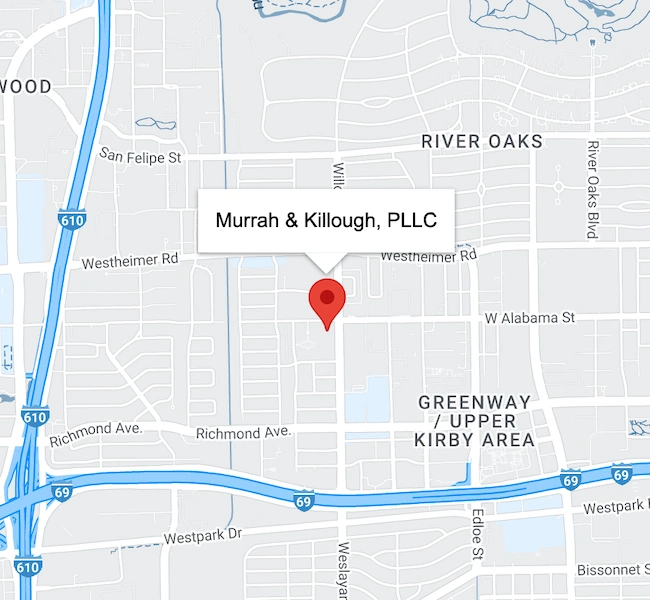
Houston Office
3000 Weslayan St.
Suite 305
Houston, Texas 77027
Phone
281-501-1601
Copyright © 2026 Murrah & Killough, PLLC. All rights reserved.
