

- About Us
- Business Law
- Civil & Commercial
- Family Law
- Resources
- Contact
Our Blog Post
Why Breach of Fiduciary Duty Matters in Closely Held Companies

When Trust Breaks Down in a Small Texas Business, the Damage Is Widespread
In a Texas closely held company, a breach of fiduciary duty can do more damage than a simple business mistake because a small group of owners usually controls the money, records, pay, and decision-making. Texas law also has special rules for owners in closely held corporations and closely held LLCs that can make these disputes more direct and more personal in court.
Why These Cases Affect Small Texas Companies
A closely held company is usually not a public business with thousands of investors and layers of oversight. In Texas, a closely held corporation is typically one with fewer than 35 shareholders and no public market for its shares. A closely held LLC is similarly defined by a small ownership group and no public market for its interests. People in these businesses often wear several hats at once. One person may be an owner, manager, officer, and the person controlling payroll and bank access all at the same time.
These companies run on trust. When that trust breaks down in a family business, medical practice, construction company, or local service company in Texas, there is often no outside board, no active human resources team, and no real market for a minority owner to exit. A business dispute attorney often sees that the harmed owner is trapped in the company while the person in control keeps making decisions.
What Fiduciary Duty Usually Looks Like
Fiduciary duty is the duty to act with loyalty, honesty, fair dealing, and care when the law or the business relationship requires it. In a closely held company, this usually comes up when someone with control puts personal interests ahead of the company or another owner in a way the law does not allow. Texas law also states that officers perform duties in the management of the entity as provided by the governing documents and other applicable law, which makes company agreements and governing records especially important in these disputes.
Common examples include the following:
- Self-dealing: A controlling owner steers company money, contracts, or property to a separate business they own.
- Hidden compensation: Salary, bonuses, or perks rise for insiders while profits available to other owners disappear.
- Excluding an owner: The person in control withholds records, blocks votes, or cuts off access to financial information.
Why Texas Law Makes These Disputes So Important
Texas does more than define closely held corporations and LLCs. It also changes how some owner claims can be brought. For a shareholder in a closely held corporation, certain derivative suit requirements do not apply in the traditional way, and a court may treat the claim as a direct action for the owner’s own benefit. Texas courts have applied similar reasoning to members of closely held LLCs, though the analysis often turns on the company’s governing documents and the specific facts of the dispute. That can matter a great deal because it may reduce some of the procedural barriers that exist in larger company disputes.
For business owners, that means this is not just a technical issue. A breach of fiduciary duty claim may become one of the strongest tools available when money has been diverted, ownership rights have been squeezed, or company records do not match what an owner was told. Business litigation lawyers will often focus on control, records, intent, and where the money actually went.
What Owners Should Look for Early
These cases usually start with a pattern, not one dramatic event. The warning signs often appear in bookkeeping, access problems, or decisions that make no business sense unless someone is benefiting behind the scenes.
Pay attention to signs like these:
- Sudden changes in compensation: One insider begins receiving higher pay, reimbursements, or personal benefits with no clear approval.
- Missing financial visibility: Tax returns, bank statements, general ledgers, or shareholder reports become harder to obtain.
- Related-party deals: The company starts paying vendors or landlords tied to a decision-maker inside the business.
What Makes the Damage So Serious
Money is only part of the problem. In these companies, the damage can affect ownership value, tax liability, voting rights, personal guarantees, and future income. A minority owner may lose expected distributions while still carrying tax consequences from company profits. Business records may become unreliable. Relationships inside the company can collapse so badly that the business cannot function.
The company loses money or opportunities, and the owner loses trust, leverage, and a fair return on years of work.
Our Business Law Attorneys Can Help If You Have a Dispute Involving a Closely Held Company
If you believe a fiduciary duty has been breached in your closely held company, Murrah & Killough, PLLC is ready to help. Call (281) 501-1601 or contact us online to schedule a confidential case evaluation.
Contact Murrah & Killough, PLLC for skilled business law litigation.
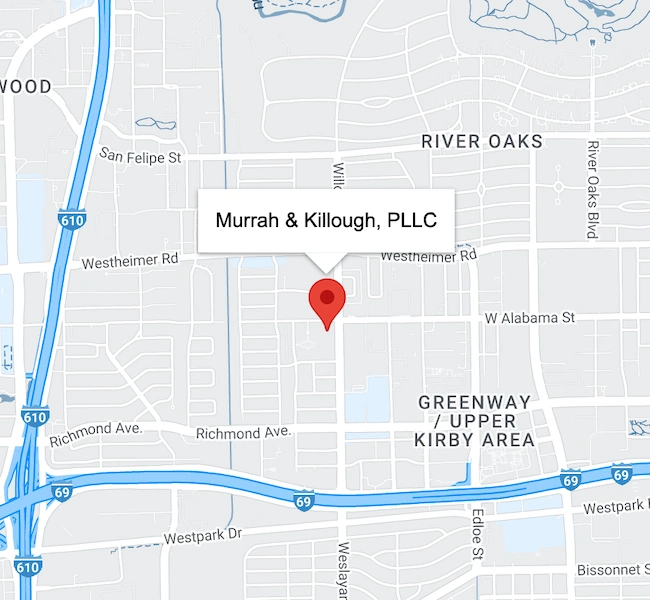
Contact the experienced lawyers at Murrah & Killough, PLLC today & schedule your free consultation. We proudly serve Houston, & all throughout Texas. Visit our law offices at:
Our Houston Office
3000 Weslayan St. Suite 305
Houston, Texas 77027
Phone: (281) 501-1601
Contact Our Team Today!
Fields Marked With An “*” Are Required
"*" indicates required fields

Houston Office
3000 Weslayan St.
Suite 305
Houston, Texas 77027
Phone
281-501-1601
Copyright © 2026 Murrah & Killough, PLLC. All rights reserved.
